Interview with a Night Sky Photographer
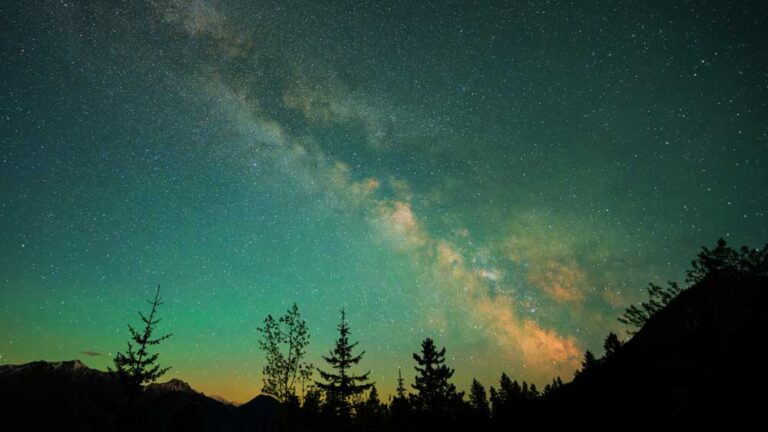
Randy Milanovic doesn’t talk about nighttime photography as if it’s just one subject. The most obvious target, our Milky Way, is a major part of it, but not the whole of it. (If you’re new to night time photography, this interview sheds a lot of light on the topic.)
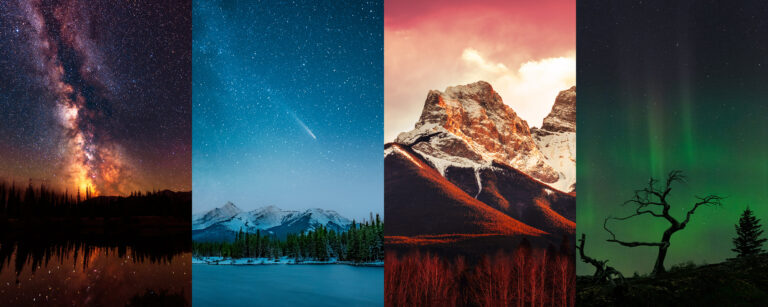
“Milky Way is a big part of it, but it’s not the only thing out there. Aurora. The moon. Nebulae. Hydrogen-alpha detail. Meteors. Airglow. And clouds. Clouds matter a lot. Most of the time, they’re annoying, but they can also surprise you. A night time shoot depends what the night is giving me.”
That line explains a lot about the way he works. He is not trying to force every night into the same formula. The subject changes the approach, and the conditions decide how far he can push it.
Cloud cover is still the first filter. If the sky is not clear enough, the rest hardly matters. After that he looks at moon phase, darkness at the location, wind, temperature, and moisture. Those aren’t just side notes. They can shape the whole night.
“Dew, frost, wind. That’s what shuts you down.”
Forecasts help, but the real decision comes from reading what the sky is actually doing, both before leaving and after arriving. Sometimes that means changing the plan completely. In one case, it meant driving two hours through a snowstorm for a lunar eclipse because there was a small break in the clouds open just enough to get the capture. That is a very different thing than simply going out to shoot. It shows the mix of know-how, stubbornness, timing, judgment, and flexibility that night photography often demands.
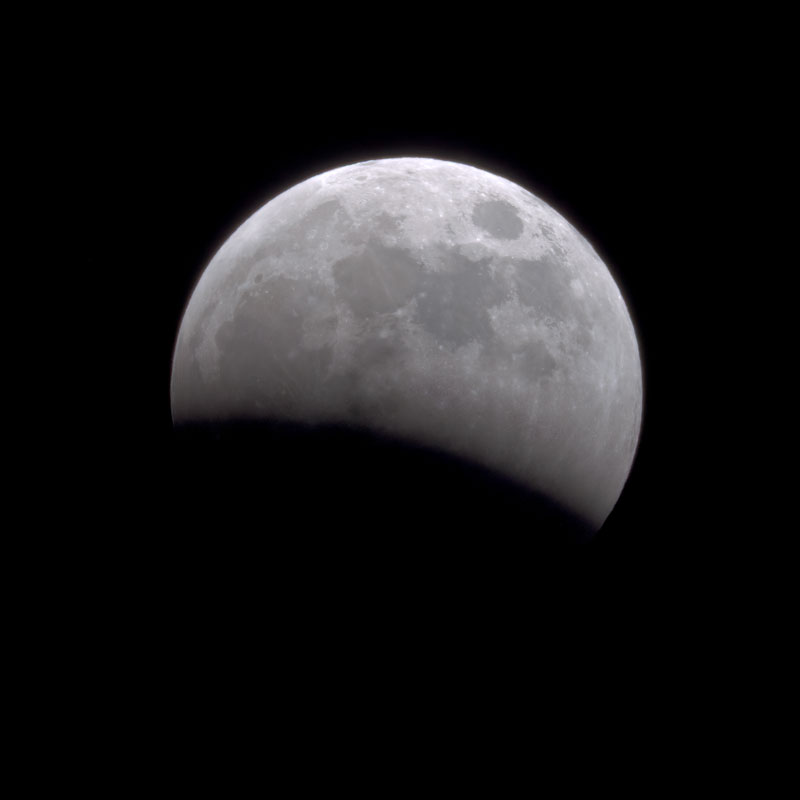
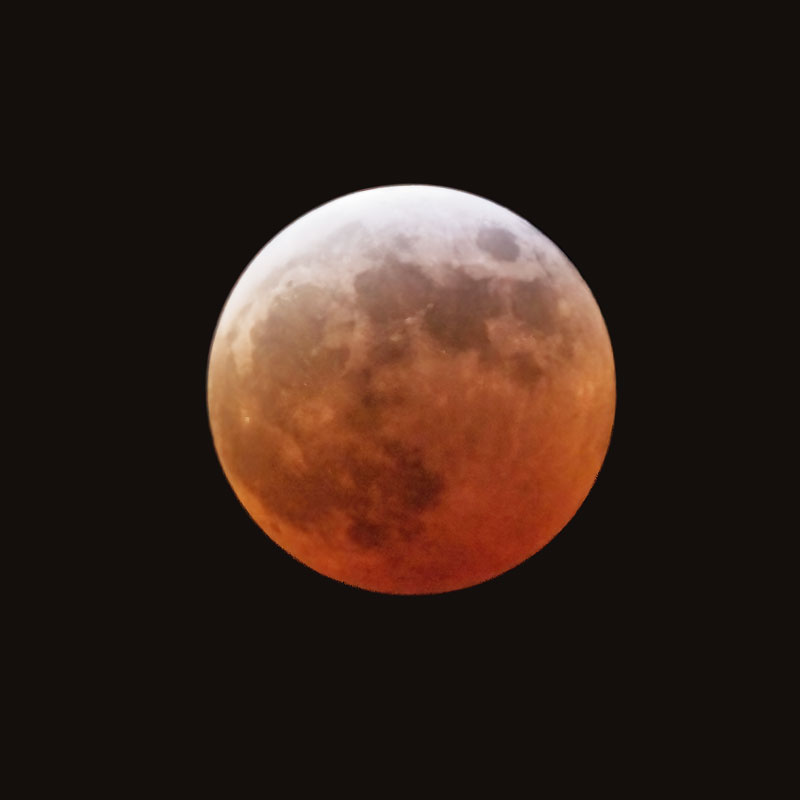
Once on location, he doesn’t rush to unpack and start snapping pictures.
“I’m looking first.”
That means checking the horizon, confirming the angle of view, and looking for everything that might weaken the frame. Headlights. Signs. Distant lights. Obstructions. Night photography changes the value of ordinary things. A little light on the horizon can be ignored in the daytime but a major problem after dark.
Only then does the tripod come out.
“Tripods matter. If they’re not stable, nothing else matters.”
That’s not a casual comment. It connects to almost everything else. A solid tripod matters for wide Milky Way work, for stitched captures, for lunar work, for time lapses, for any setup that needs to hold its position while the sky changes. He also always wants a remote trigger.
“I don’t touch the camera once it’s running.”
That is part habit and part discipline. Avoid movement always. A simple problem to solve before it becomes a bigger one.
For a basic Milky Way shot, the starting point is straightforward. A wide lens at f/2.8. Manual focus. Either remote or interval shooting. Around 20 to 25 seconds, depending on conditions and lens length. Focus is set by zooming in on a star or distant light, getting it as small and sharp as possible, and then leaving the camera alone.
That’s a practical starting point, but it is not necessarily where the night ends.
What becomes more interesting is how quickly he moves past standard wide-angle approaches when the conditions support something more ambitious.
“What might surprise people is how quickly I’ll reach for the 60mm when capturing the Milky Way.”
The choice is about detail. It’s about building a cleaner image with less distortion than forcing the whole scene through an ultra-wide frame. But that choice immediately creates another one.
“At 60mm, the camera goes on a tracker. Shutter length and focal length are tied together. When we do the math, shutter length drops fast in order to avoid star trails or elongated stars.”
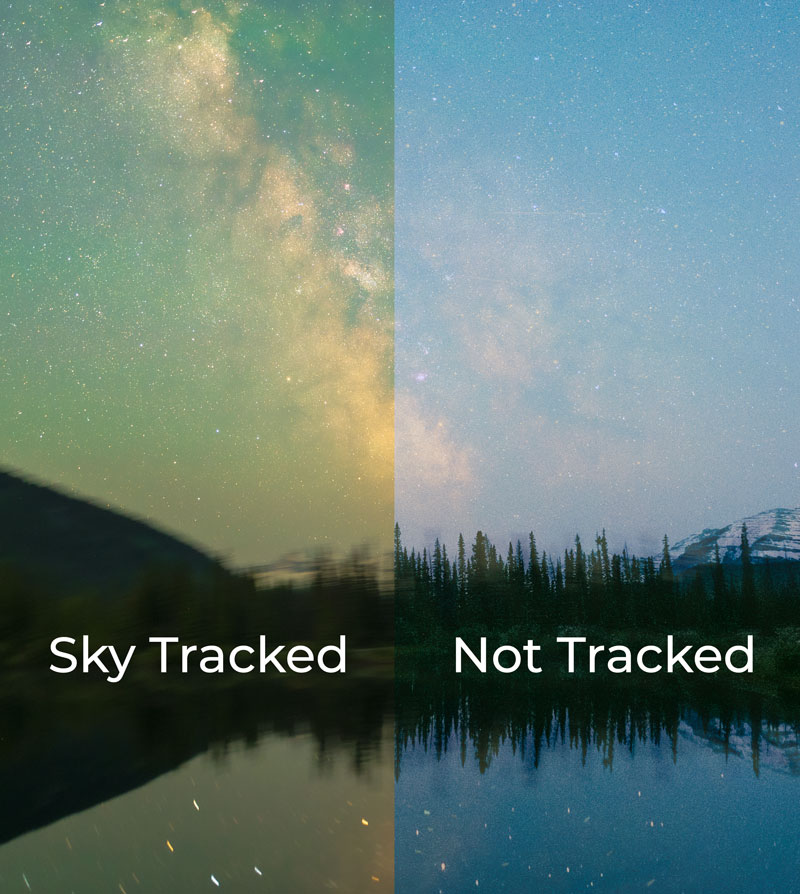
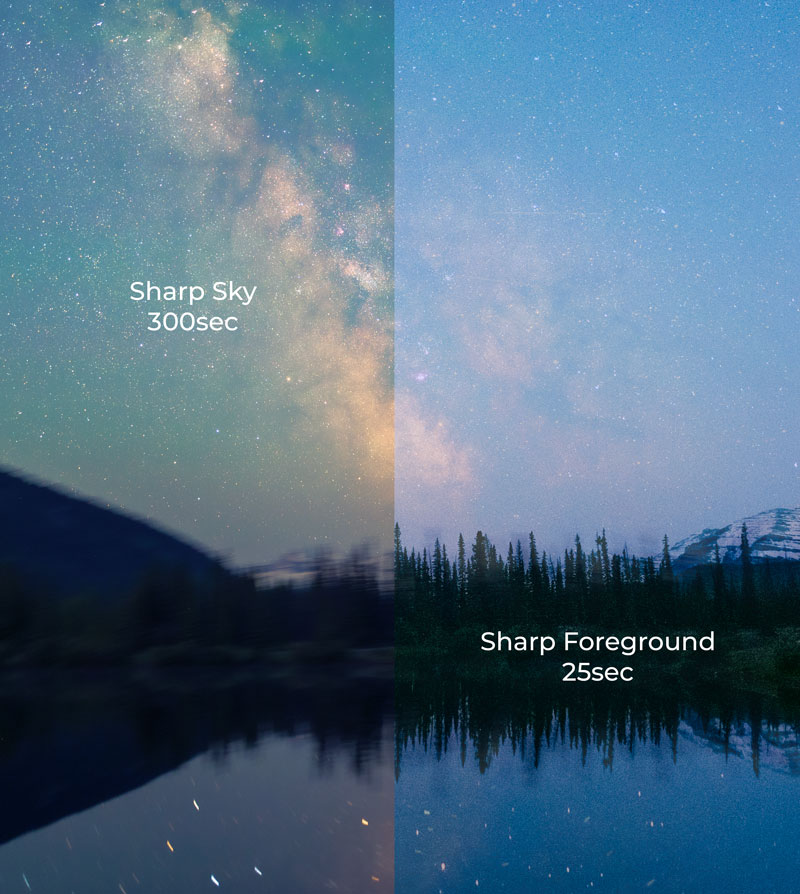
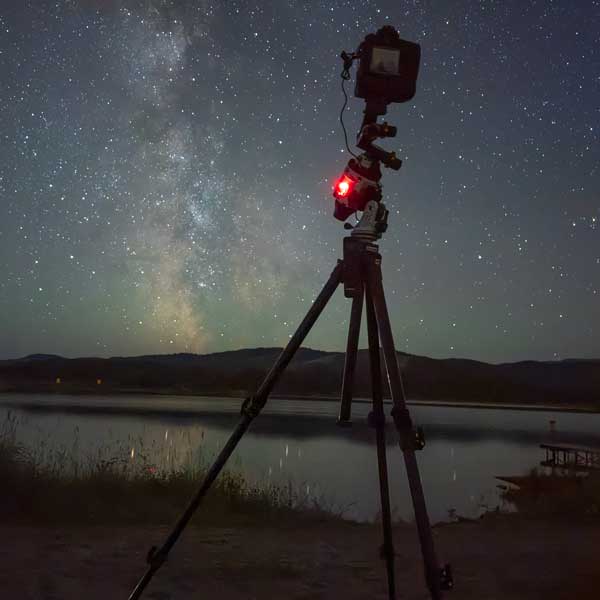
That’s one of the places where experience shows. He is not speaking about trackers as if they were something to show off, but as necessary tools. He uses them when the exposure demands and when the return is worth the setup time. If he’s building a stitched Milky Way image at 60mm, the tracker is part of the plan. The camera is tracked, the settings stay consistent, and the image is built in sections with about 40 percent overlap so it can be stitched later. The foreground is separate, untracked, tripod only, with the ISO kept consistent for blending and the exposure time adjusted as needed.
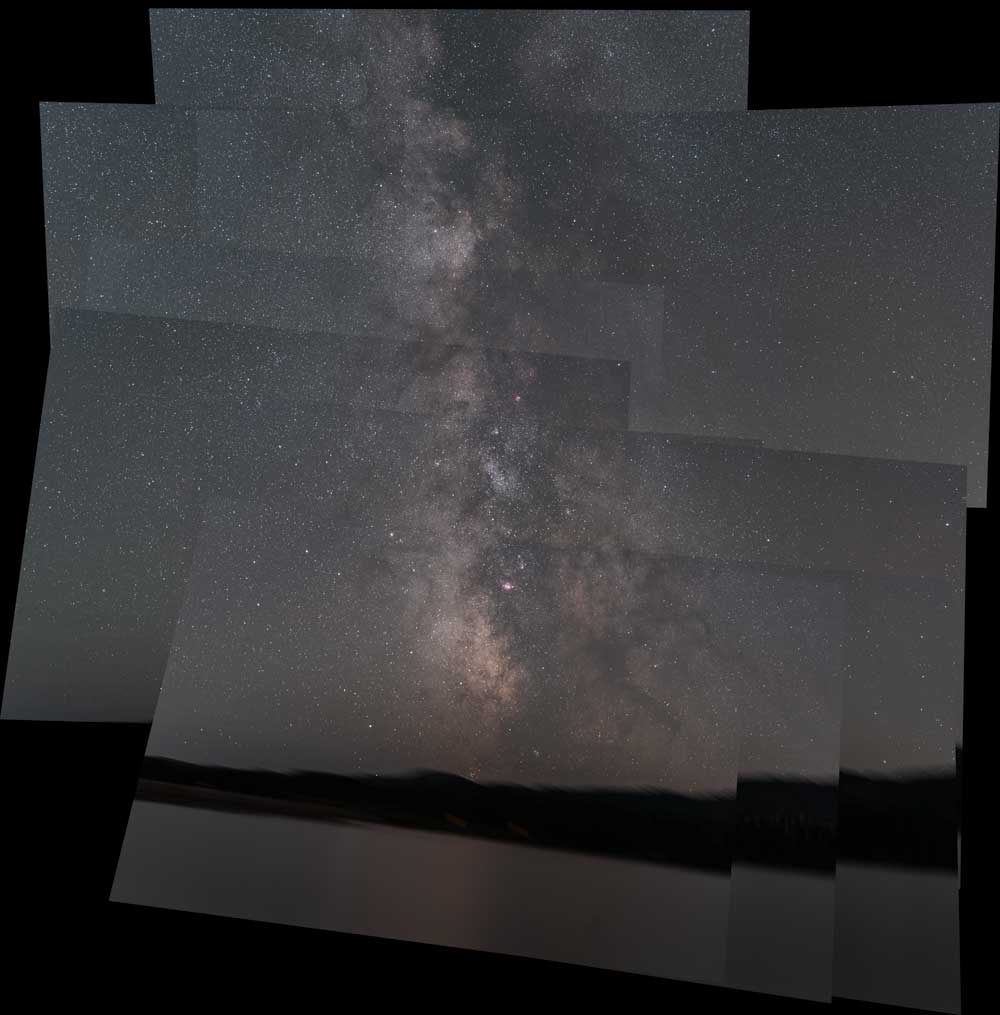
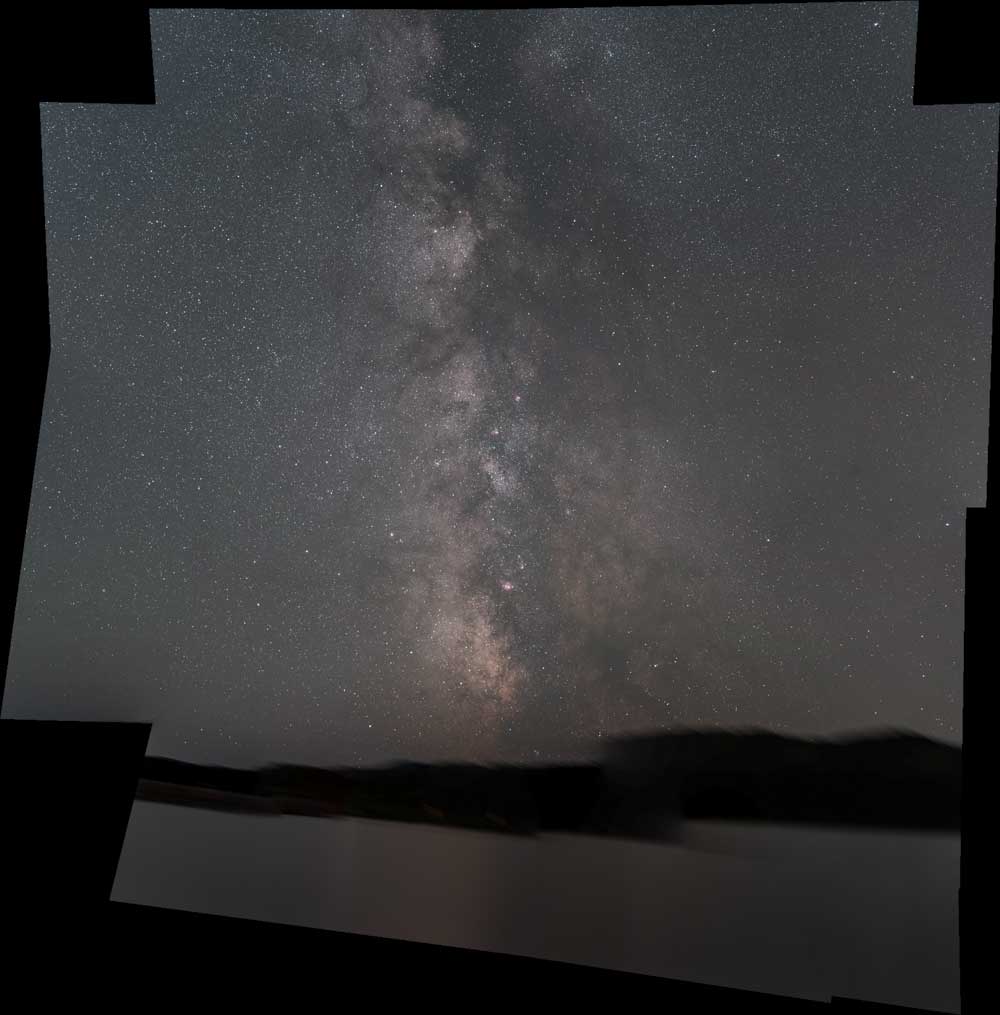
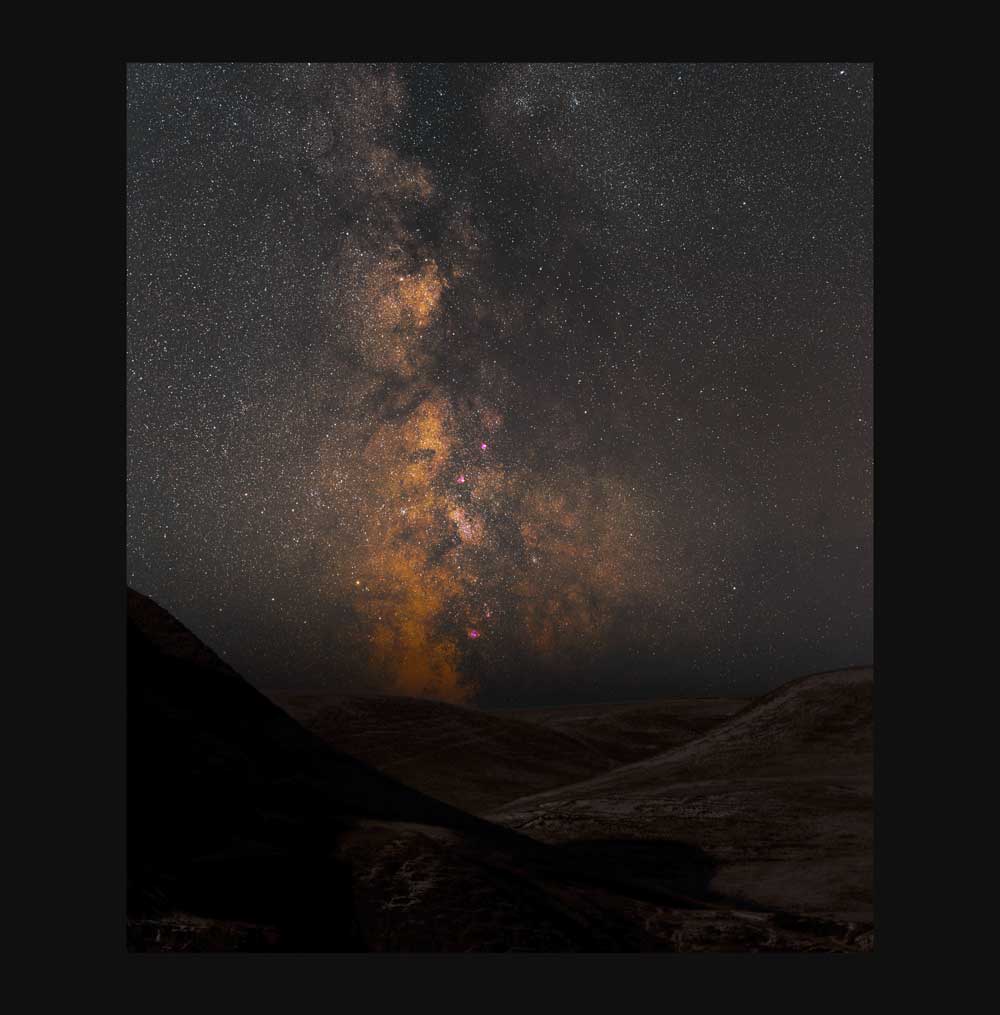
The important part is that he’s not describing a method, but a decision tree. If the sky is average, keep it simpler. If the sky is clean, dark, and stable enough, push for more.
Tracker use, though, is never casual.
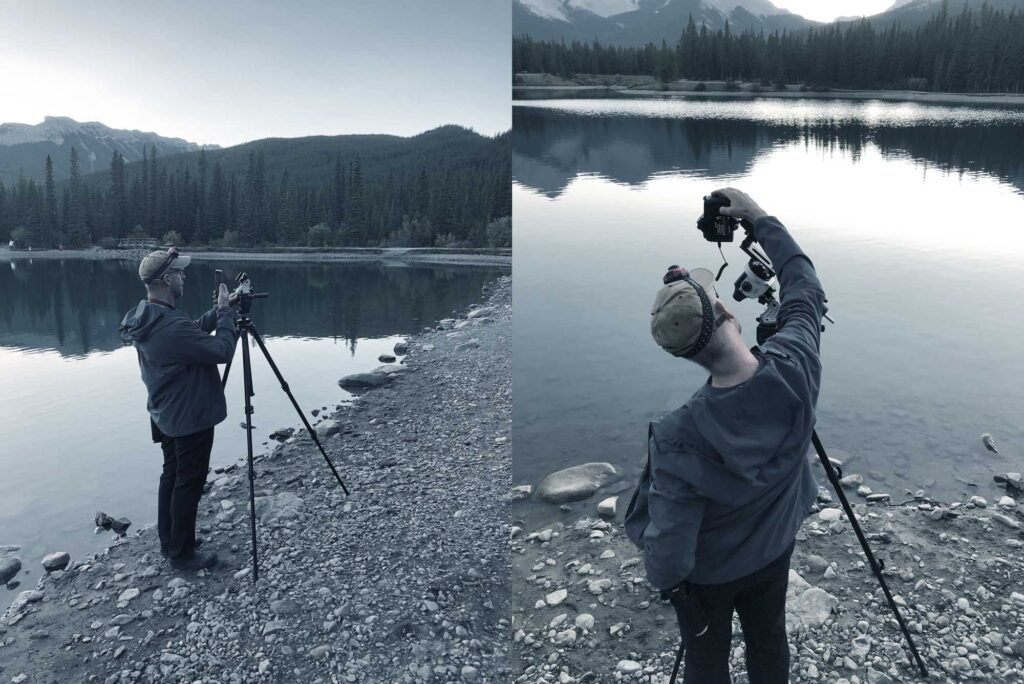
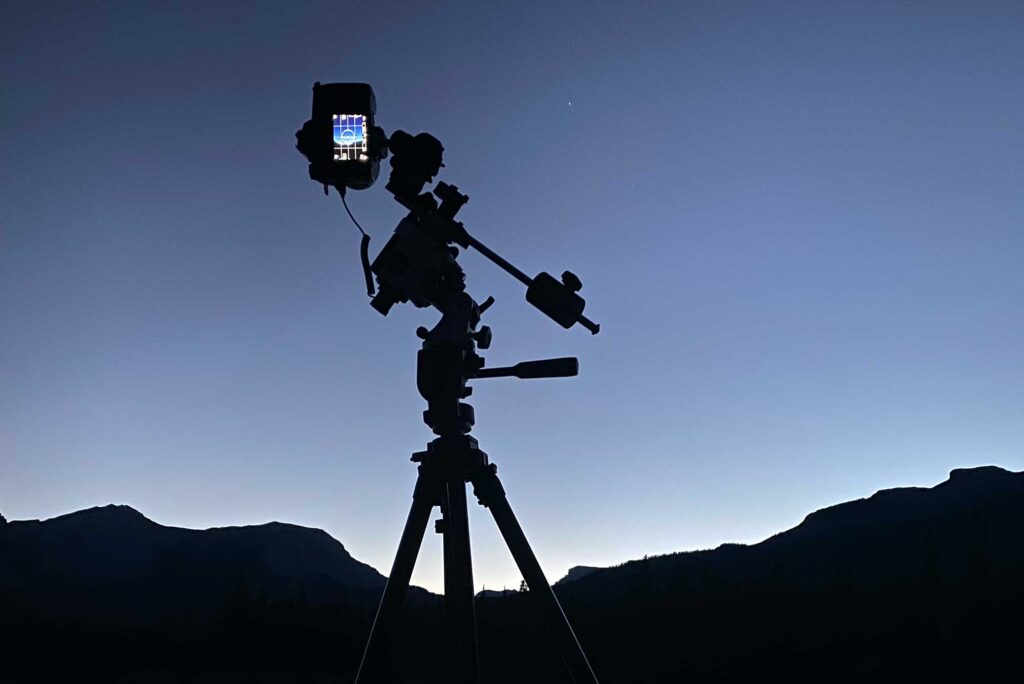
“It takes time to align a tracker. Easily 20 to 30 minutes. Move the tripod an inch and you start again.”
That cost matters. Wind matters. Cold matters. Time matters.
“Windy? Forget it. Icy cold? Forget it.”
There also has to be enough opportunity in front of him to justify the setup.
“If I can’t capture several shots, there’s no sense.”
That’s the other half of the story. The tracker can produce better results, but only if the conditions, the subject, and the available time all line up. Otherwise the setup can consume the moment.
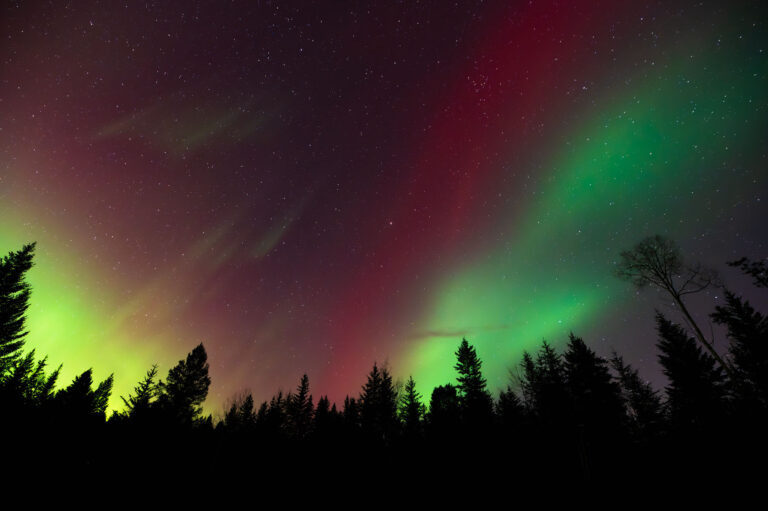
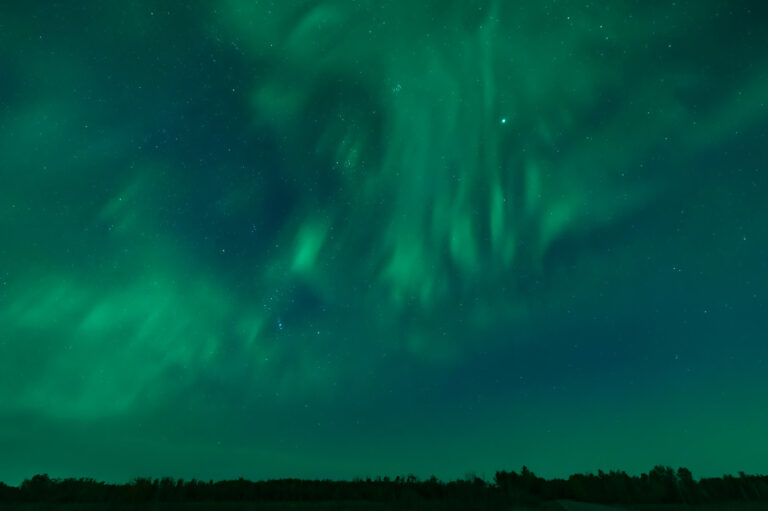
Aurora changes the pace entirely.
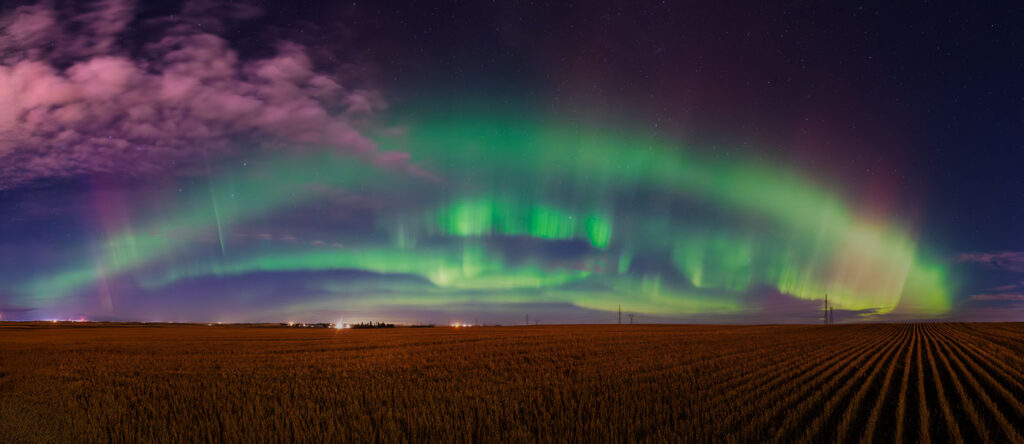
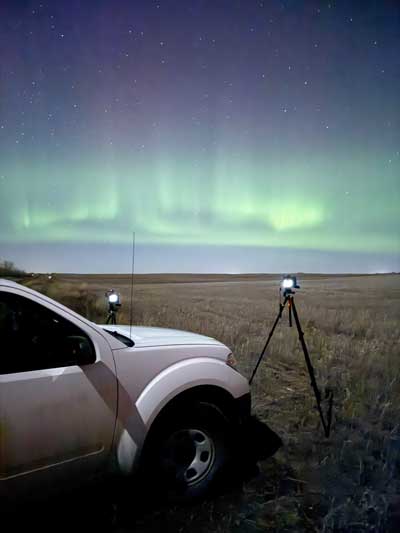
Milky Way can be planned for. Aurora can force decisions minute by minute. That is why he doesn’t approach them the same way, even though both fall under the umbrella of night sky photography.
“Aurora usually with the D780.”
There is a practical reason for that. The D780 handles reds well, and works great for most of his time-lapse work. It fits the role well, especially when interval-based shooting is part of the plan. Aurora also changes the exposure strategy immediately.
“Aurora doesn’t hold still.”
Long exposures stop being helpful once the aurora is dancing. Structure and shape soften. Vertical pillars that look dramatic overhead blur when the shutter is open too long. So the exposure comes down, sometimes to only a few seconds, and the tracker stays out of it.
“Never a tracker for aurora.”
That doesn’t just reflect a gear preference. It reflects the nature of the subject. With Milky Way, he can build a result and go for multiple exposures to stack. With aurora, he has to react to what the sky is doing in real time. That creates another kind of judgment problem too. When the sky gets active, it is tempting to rush. Change a lens. Move the tripod. Chase another angle. But that can be a mistake.
“It’s easy to move quickly to attempt a new capture, but that’s often a mistake. The time to reposition or change a lens might mean missing the capture altogether.”
That’s one of the strongest insights in the whole conversation because it pushes against the usual idea that more captures equal better results. Sometimes the smarter decision is to hold tight with the setup you already have and let the sky come to you. But, the aurora’s brightness can quickly change too.
“You could be out for hours in the dark. There’s time to make changes. It’s okay to adapt when conditions change. Tweak settings, not location.”
That tension is real. Don’t panic and chase every movement, but do stay alert enough to adapt when the night gives you room.
Some nights justify more than one setup. Sometimes one camera is enough. Sometimes two. Sometimes all three.
“I’ll run one, two, or all three cameras for different captures.”
That is not excess for its own sake. It is a way of dealing with a sky that may be offering more than one worthwhile subject at the same time. One camera body and lens combination may be right for Milky Way detail or different focal length. Another may be better for aurora. Another may be running a time lapse or covering a wider scene while the other rigs handle more specialized work.
“I consider the camera and lens combination for that subject or target. Distance factors in. Composition factors in.”
That line says more than it appears to at first. Distance at night is not just about what looks close or far in a frame. It is also about what happens between the camera and the subject. An aurora low on the horizon might be partly blocked by haze, fog, or low cloud even while the sky overhead is clear. On the prairies, where he often shoots, there are also small towns, farms, and energy installations scattered across the landscape. All of them add light pollution. That pollution affects both the composition and the capture itself. It can lower contrast, muddy colour, and weaken what would otherwise be a stronger image.
The role of each camera and pairing lenses to them changes with different targets.
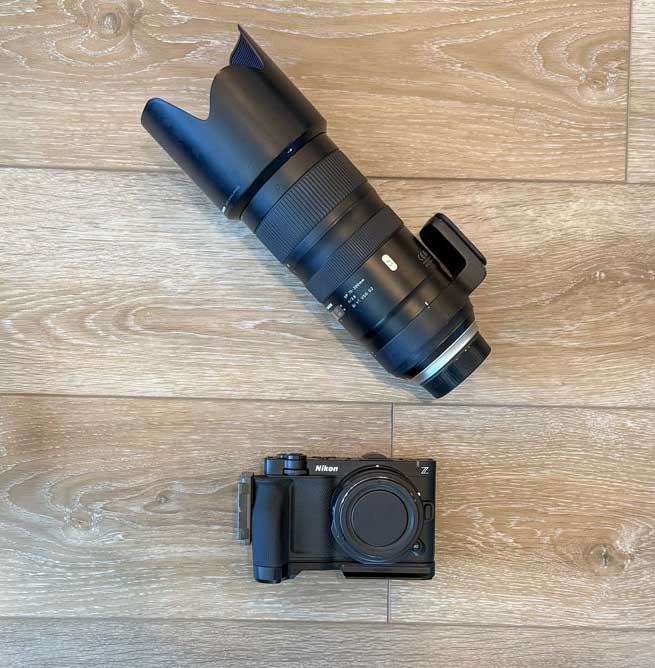
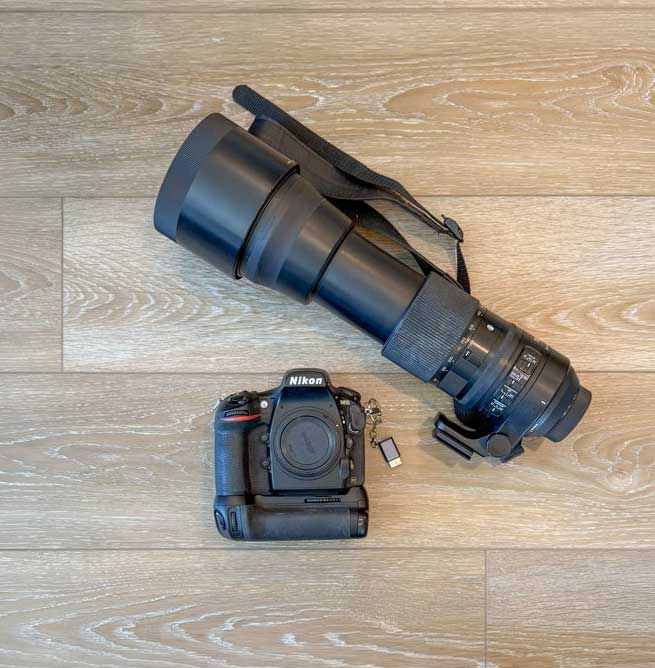
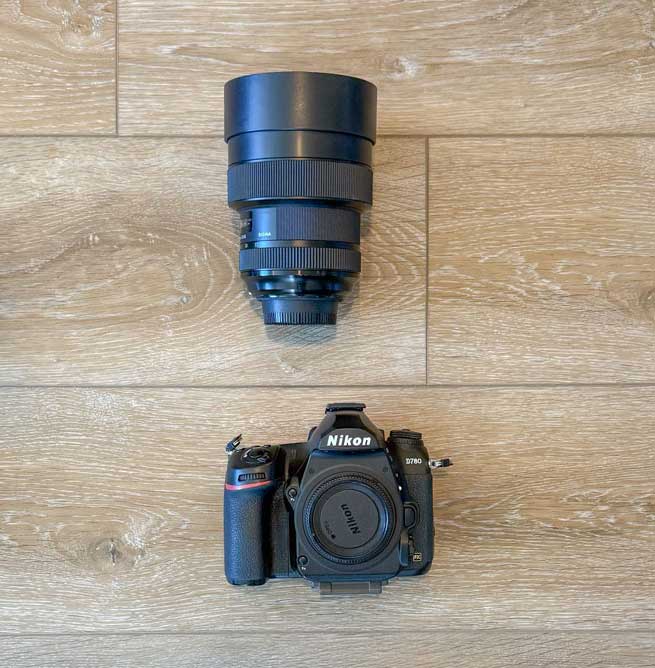
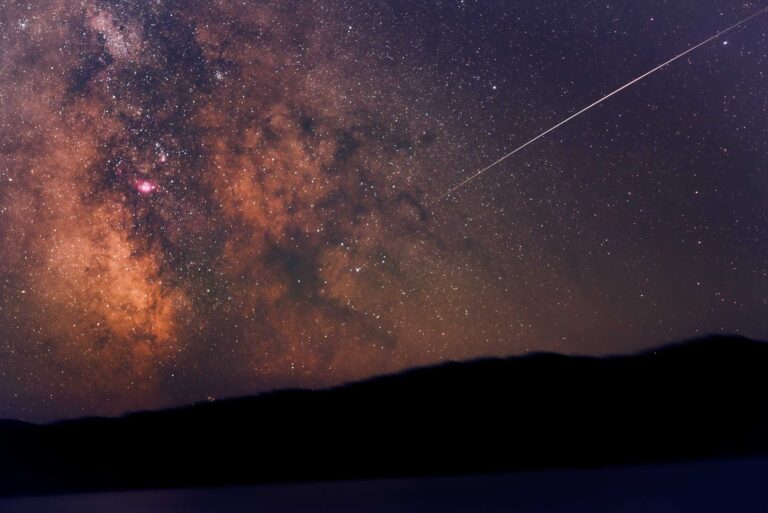
Milky Way details mean selecting the D810 with the H-alpha modification and a 60mm lens. That does not mean the camera is locked away for only one purpose. It is still a camera he can use for other photography opportunities. But for night sky work, especially where hydrogen-alpha detail matters, it becomes the combination of choice. The D780 usually carries aurora and time-lapse work. The Zr Cinema is part of the kit too – especially for zooming in on the Moon, wildlife, or mountain tops. At the moment there is no external intervalometer available for the Zr, so it’s not yet part of time-lapse side workflows unless he can trigger them manually or set up the internal intervalometer, which is tedious.
Time lapse, though, is not treated like a novelty or a separate genre. It is part of how he sees the night.
“Time lapses too for both Aurora and Milky Way. Sometimes star trails, too.”
That matters because some night sky subjects are not just about a single frame. They are about change. The movement of the Milky Way. The build and collapse of aurora. The slow motion of stars. The transition between day and night.
“Capturing the transition between day and night is very challenging. The changes in light levels are huge”
He refers to that kind of time lapse as a Holy Grail sequence, which is what many photographers call it because the settings have to change gradually and accurately through a long run of frames while the light changes completely.
“Holy Grails traditionally mean manual setting changes between each capture that need to be perfect.”
That is the kind of detail that makes clear why night photography is not just about standing out under the sky. It can be repetitive, technical, and demanding in a way that is easy to underestimate from the outside. He is also practical about technology when it helps.
“Thankfully, newer technology such as the Arsenal and more recently, the Insta360 X5 360 degree camera, have settings that can run a Holy Grail automatically while we work with other cameras – or to stay warm.”
The moon pulls the work in another direction again. It is not just brighter. It is different. It is about detail, atmosphere, and timing. The atmosphere becomes more of a factor the lower it gets. Transitions matter more. Stability matters more. A tracker can be used for the moon, though he has not done that yet. Even saying that is useful because it shows the way he thinks. The tool is there if the capture requires it. He is not committed to complexity for its own sake, and remains open to experimentation.
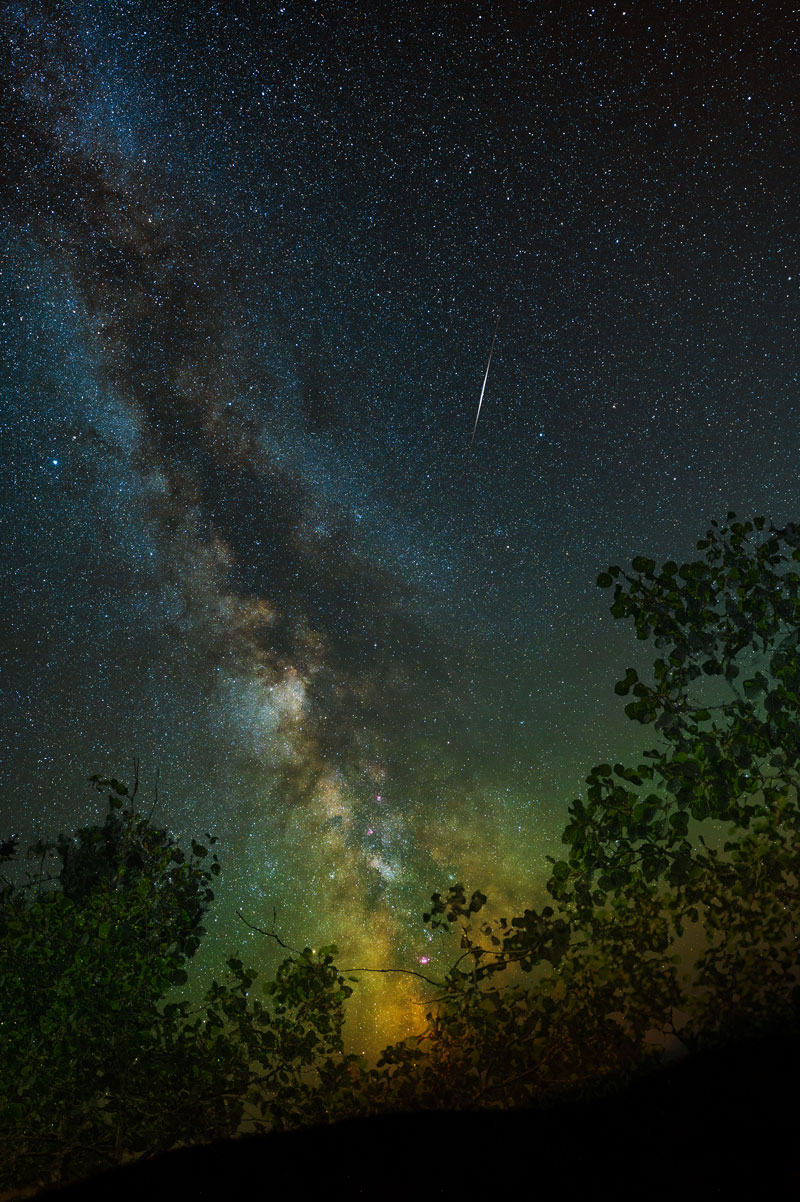
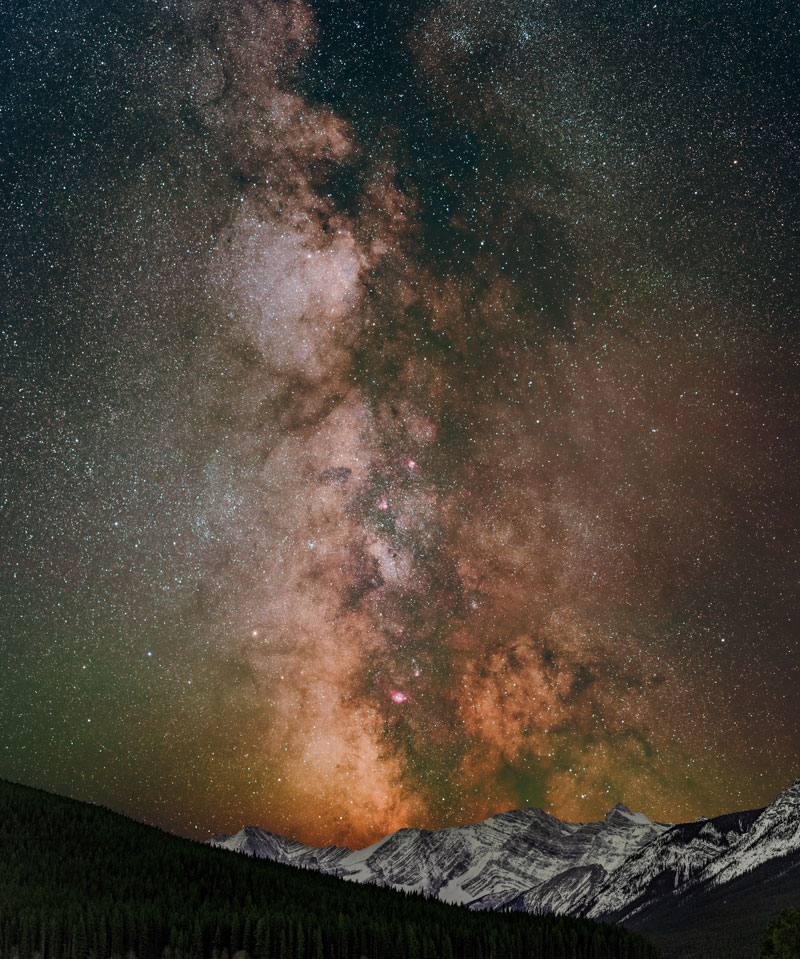
Nebulae and hydrogen-alpha-rich areas of the sky push him toward the modified D810 for the same reason. It is about more detail.
“I use the modded D810 when I want more detail. Which is always.”
That answer is funny, but it is also true to the larger pattern. He is not chasing complexity because it sounds advanced. He is chasing it when the sky justifies it and when the extra effort will actually return something meaningful.
His approach to exposure is equally practical. He’s not pretending every decision starts with the histogram.
“I’m not always looking at the histogram when setting up.”
That becomes especially true in tracked work, where exposure, ISO, and shutter length may sit far outside what feels normal in ordinary photography. At that point, the only histogram that really matters is the one in the captured image. A first frame tells him whether he is in range. Too light or too dark are enough to push him toward an ISO or exposure adjustment. Aperture usually stays put.
“I’m not usually adjusting aperture on the tracker because I’m usually sitting one stop off widest. Lenses tend to underperform at both ends of their range.”
That is the kind of sentence a working photographer says because it is not theoretical. It is a practical compromise that comes from seeing how lenses behave under real conditions.
The route into all of this was not clean or glamorous.
“My first Milky Way capture was done on AUTO, which didn’t work well.”
That failure led to purchasing an Arsenal device, which he originally bought because it promised to set the camera automatically for him. At the time, he’d never really used manual because he didn’t know how. The device helped him get a fairly good Milky Way image, but its bigger value was that it became a teacher. He watched what it was doing…paid attention to the settings. Over time, he learned to match or improve them, quickly switching to Manual mode.
“In a way, the Arsenal taught me how to use my camera’s settings.”
The first successful capture stayed with him for reasons that have nothing to do with technical perfection. Seeing the Milky Way appear on the camera monitor that first time had him jumping with joy and hooting aloud. Cows bellowed and some nearby coyotes howled along with him. Then, days later, while reviewing the image, he saw bands of colour along the horizon and assumed they were light pollution. Another photographer, Lori Grace, later pointed out that what he had captured was airglow.
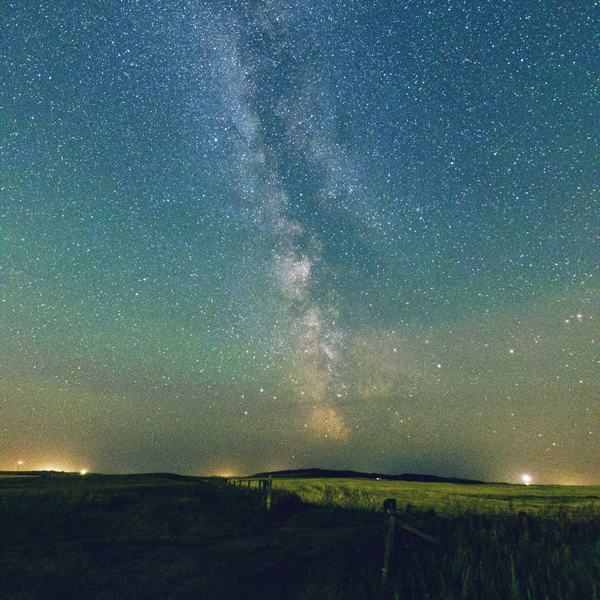
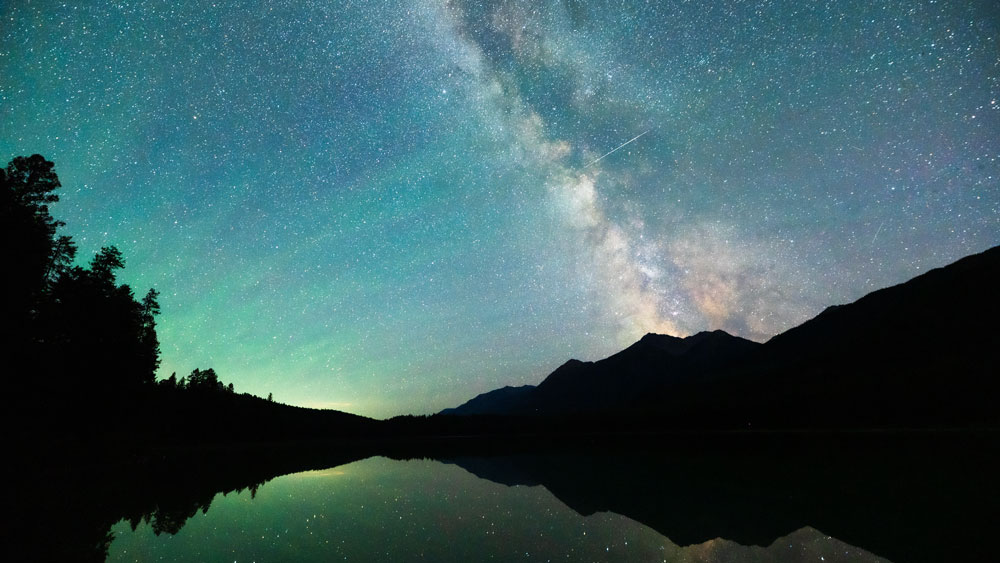
That memory belongs in the piece because it says something important. Experience does not just teach you how to expose. It teaches you what you are even looking at.
He carries the same grounded attitude into field behaviour. Bright white headlamps are a problem. So are phone screens. Both reset night vision and make the dark harder to read. Red light matters. Keeping it low matters. Dark adaptation matters. So does stewardship. He does not treat the environment as a backdrop that only matters when it looks good.
“It’s never cool to interfere with wildlife. Not to scare it, nor to feed it. Let it be wild. Leave only footprints. Good stewardship is important for ourselves and future generations.”
That line probably says as much about his field philosophy as any of the technical material does.
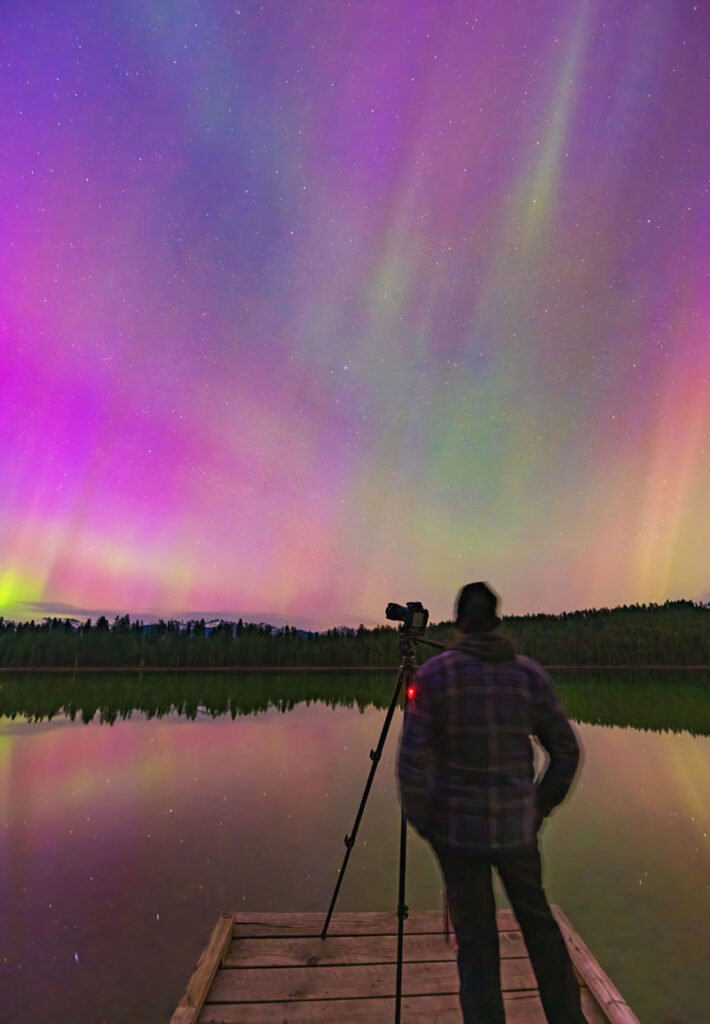
And in the end, his definition of a successful night is broader than the image file.
“If the weather or skies aren’t playing nice, it’s still good for the soul to get out of town and see the stars or breathe some fresh air. Enjoy the road trip, the company, and the activity.”
That matters because it prevents the whole process from collapsing into success or failure based only on what ends up on the memory card.
“As long as I get outside and see the sky I’m happy. Capturing images is a bonus.”
That may be the clearest through-line in his work. The technical side matters. A lot. The tracker matters when the tracker is needed. The tripod matters. The remote trigger matters. Focal length matters. Exposure length matters. Camera choice matters. But those things matter because they support a response to the sky that is already happening. They are tools serving attention.
He is not trying to control the night. He is trying to recognize what kind of night it is, and be ready for what it gives him.