Night Vision isn’t Just for the Bears
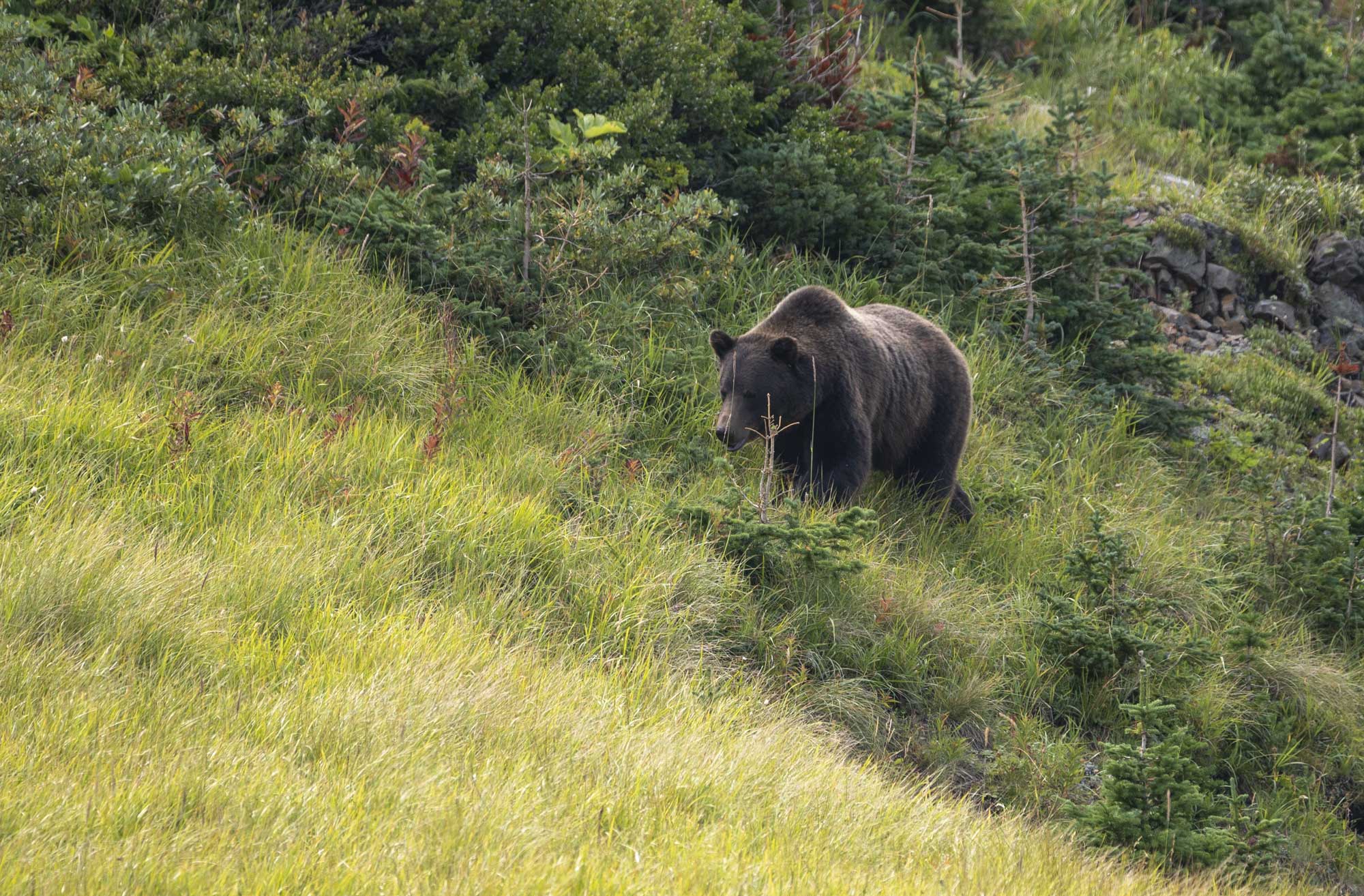
Bears see far better than we do at night. They can move, hunt, and forage in very low light because their eyes are built for it. Behind the retina they have a reflective layer called the tapetum lucidum, which bounces light back through the light‑sensing cells and gives each bit of light a second chance to be picked up.
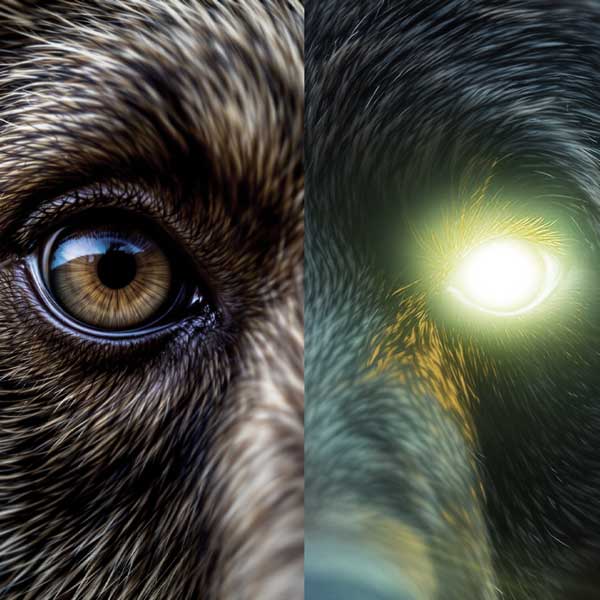
Humans do not have a tapetum lucidum.
When light hits the back of a human eye, it is mostly absorbed by dark pigment instead of being reflected. That is why our eyes don’t glow when a flashlight catches them, while the eyes of bears, cats, deer and other nocturnal animals do.
By skipping the reflective layer, we can’t see as well at night but we have sharper vision in daylight. So by comparison, our night vision is weak. In low light, that reflective tapetum gives bears a huge advantage. Their eyes are roughly seven to eight times more sensitive than ours.
It takes time for our eyes to switch from day mode to night mode.
For most people, full night vision takes about 20 to 45 minutes. First, your pupils get bigger to let in more light. Over the next 5 to 10 minutes, your cone cells adjust. Cones handle colour and sharp detail and work well in daylight, but in near‑total darkness they do not help much. After that, the rod cells take over. Rods are the cells that help you see in low light, but only in black and white. They need time to build up a chemical called rhodopsin. As your rods rebuild that chemical, your night vision improves. Most of this change happens in that first 20 to 45 minutes.
If you stay out longer in the dark, for things like stargazing, rods can keep gaining small improvements in sensitivity over several hours, but the big jump is in that first half hour. Be aware that a single glance at a bright phone screen, a car headlight, or even a bright moon can cut into that adaptation and set you back to start again.
A few things change how long this all takes.
If you are looking at bright lights and sun for hours, your eyes can take at least 10 extra minutes to adapt to darkness. Younger people usually adapt faster; older adults may need 40 minutes or more. Dim red light does not bother your rods much, because rods barely react to red. That is why many night sky photographers and astronomers use red headlamps. They can see their gear without wiping out their night vision. Your body also needs vitamin A to make rhodopsin. If you do not get enough vitamin A, your darkness adaptation slows down and, in more serious cases, you can develop night blindness.
Human vision leaned into a different strength.
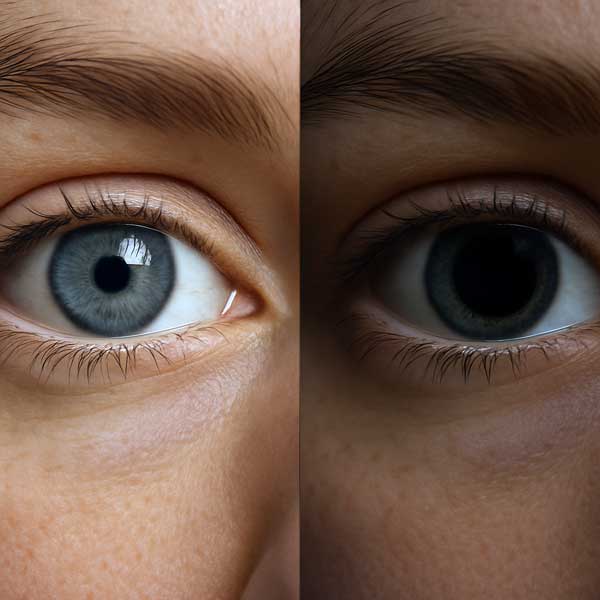
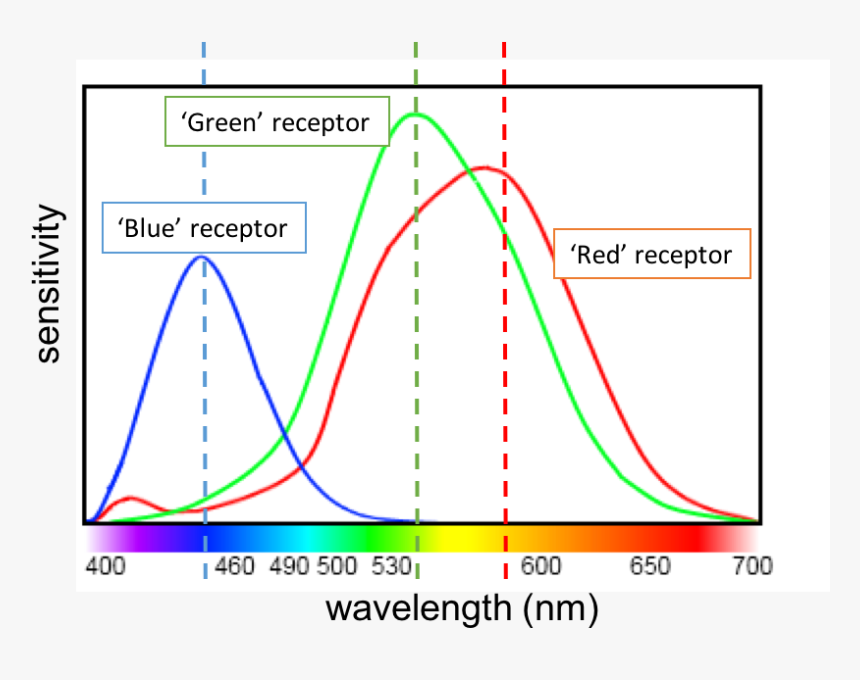
Our retinas are loaded with three types of cone cells, tuned to red, green, and blue light. This three‑colour system (trichromatic vision) helped our ancestors pick out ripe fruit, read faces, and move through bright, complex environments.
Behind the retina, instead of a mirror, we have a dark, absorbent layer that soaks up extra light. That cuts glare and sharpens the daytime image.
You can see the results of this design in everyday life. “Red‑eye” in flash photos is not real eye‑shine. We have no tapetum to reflect the light. What you see is the flash bouncing off the blood‑rich tissue behind the retina, which is why the pupils come out bright red.
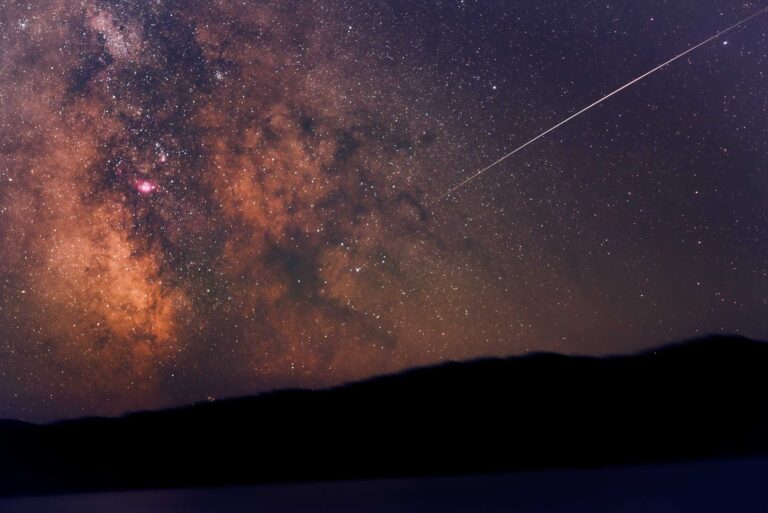
The same thing explains how we see the aurora and Milky Way.
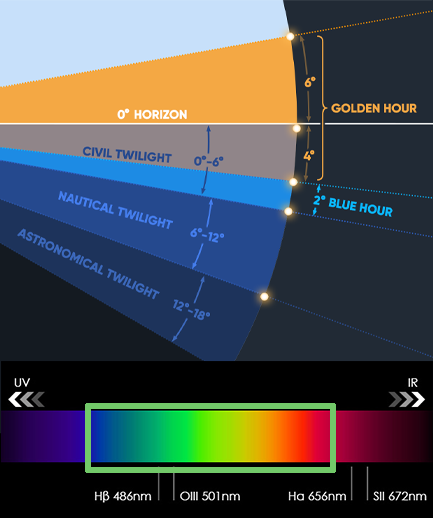
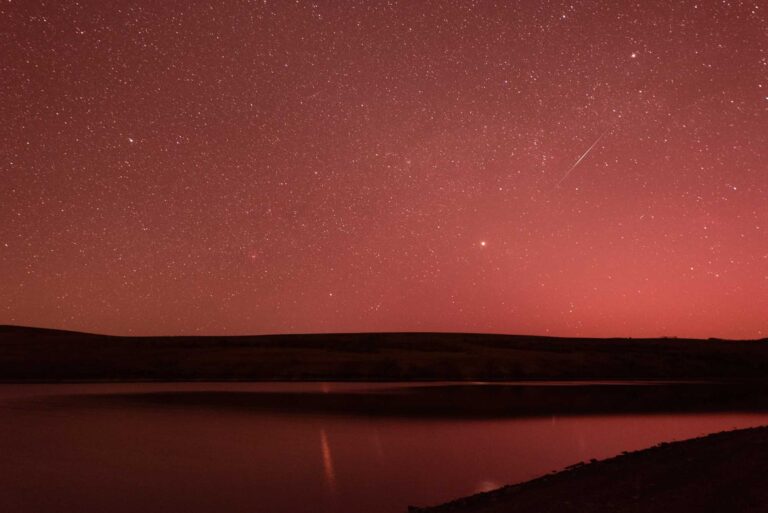
In low light, rods take over. They are very sensitive but do not detect colour, so a faint aurora often looks pale, washed out, or even grey like a cloud. Your eyes take a quick snapshot and move on. But a camera, using a long exposure, keeps collecting light and builds a much brighter, more colourful image than our eyes can manage in real time. It’s not the we cannot see the colours (we can at times when the aurora is strong), it’s just that our eyes have limits.
In bright conditions, cones dominate and give us sharp, colourful views. In the dark, rods run the show. The picture gets softer and mostly colourless, but still usable. That day‑to‑night hand‑off between cones and rods is how our vision adapts to the wide variety of lighting conditions.
Quick fun fact…digital camera manufacturers place filters in front of the sensor. These filters block most of the light outside of the visible spectrum. That’s how cameras mostly record what our eyes see – in the daylight – at night cameras can see much more.
Auroras and the Milky Way are a good way to experience how our eyes adapt.
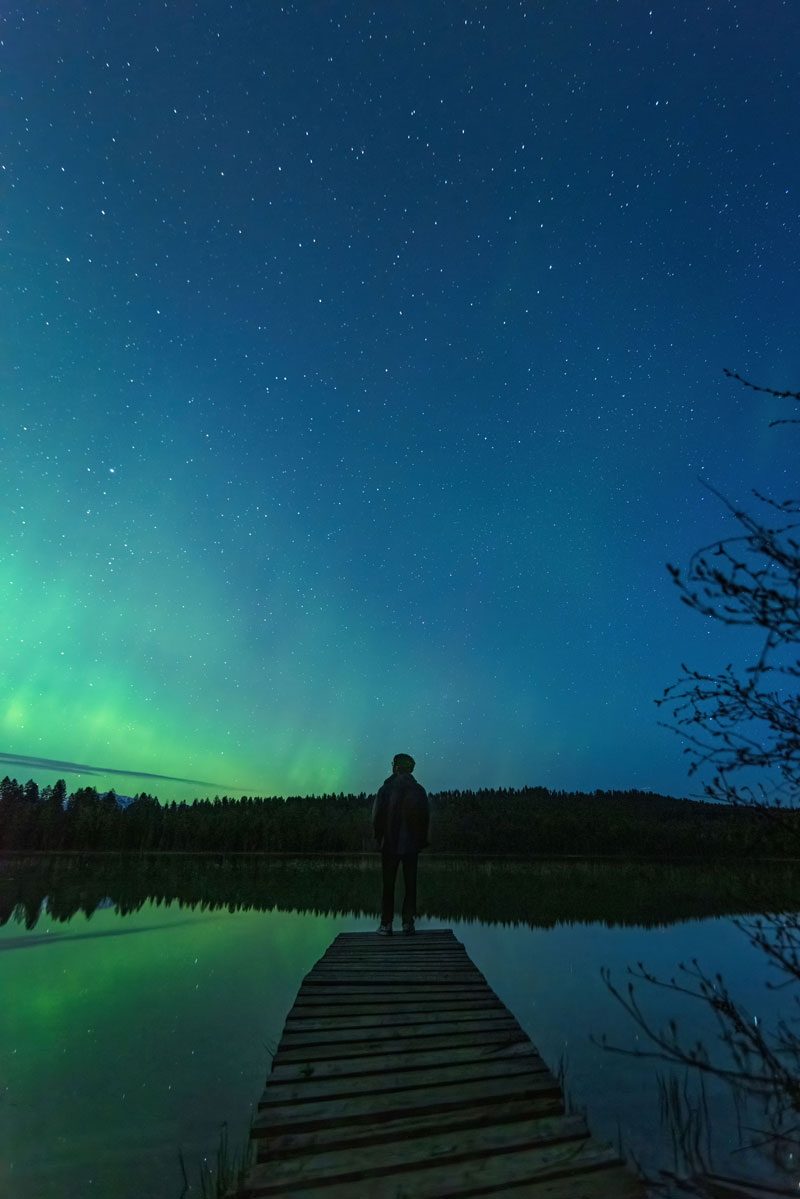
When the aurora is weak or there is moonlight brightening the sky, rods do almost all the work. The aurora may look whitish or grey, and you will mainly notice its motion and structure rather than strong color. In a stronger display, there is finally enough light to wake up the cones, especially the ones most sensitive to green, and you start to see clear green bands and even vertical curtains. Very bright auroras can add pinks, purples, reds, and even blues from atoms higher in the atmosphere. On very dark, clear nights, you may even see the Milky Way’s core as a brighter, textured band rather than just a vague brighter smudge.
If you want to see as much as your eyes can, treat them kindly in the dark. Give yourself 30 minutes away from bright light. Avoid streetlights, car headlights, phone screens, and lit buildings. Turn your phone and dashboard brightness way down or cover them when you do not need them. (Shout out to the good people and companies like Nemalux Lighting who carry Dark-Sky approved lighting products.)
Your vision will never match a bear’s, but it can do more in the dark than most of us realize, as long as we stop blasting it with light every few minutes.