Planning your shoot for the atmosphere
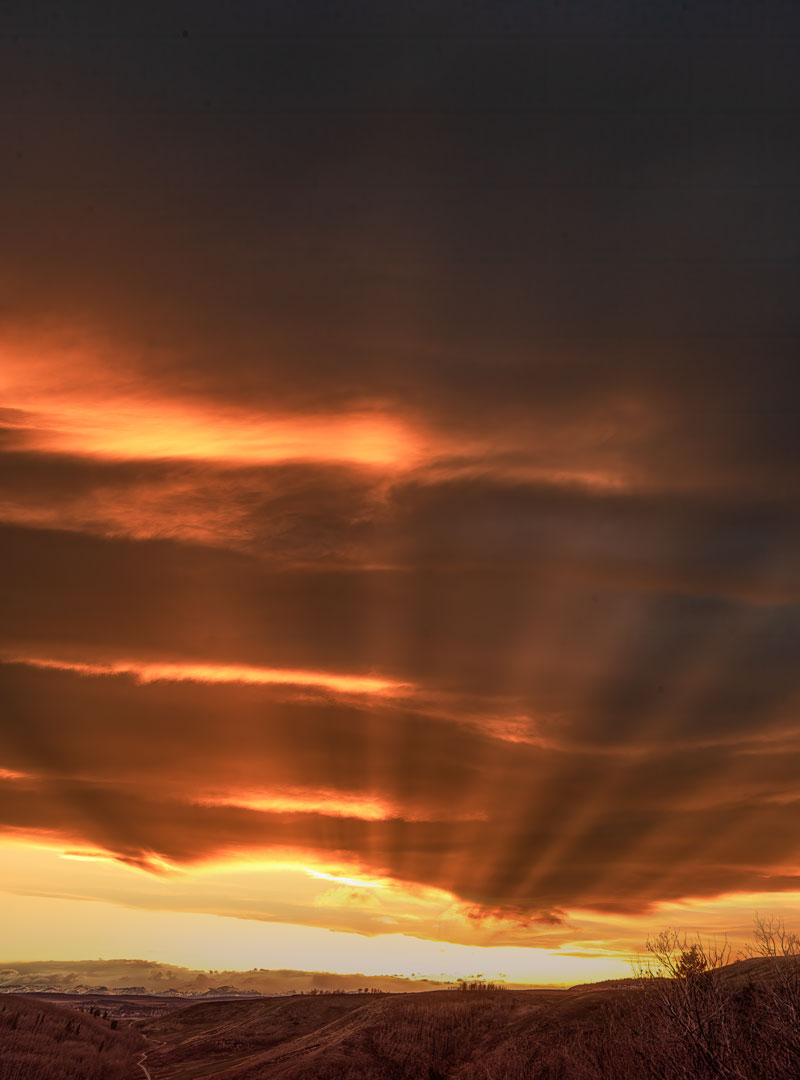
All the gear in the world doesn’t help if you ignore the sky you’re standing under – especially at night as I often do.
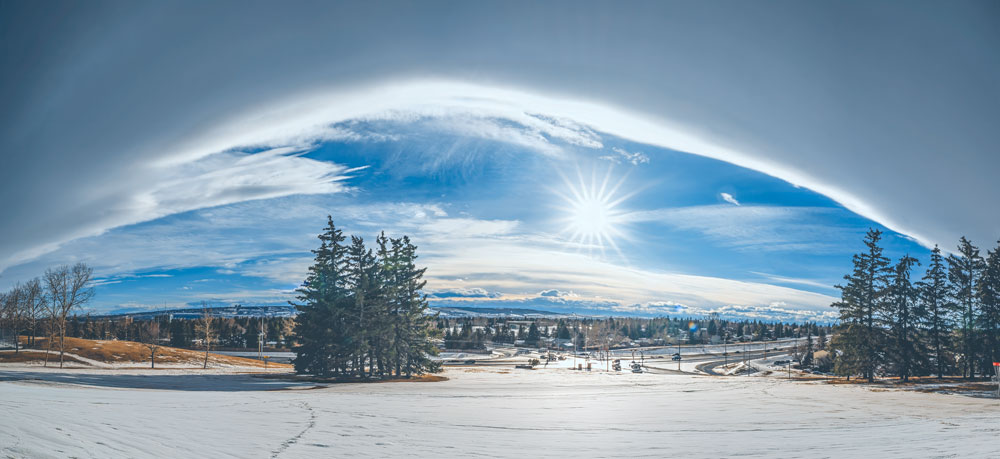
For example, in southern Alberta, we get a warm, dry wind that descends off the Rockies (Chinook wind). When it arrives, a long band of clouds form along the foothills of the Rockies and a strong wind pushes upper clouds eastward. It creates a clear band of sky in between the mountains and clouds over the prairies. The clear opening is known as a Chinook arch.
A strong Chinook arch can stretch from Rocky Mountain house in the north, to the US border in the south (some 350km as the crow flies) and be 50-100km wide.
Distance and geography matter
From the mountains near Canmore to the open prairies (Strathmore, Drumheller, Bassano, etc) it is roughly 150 kilometres measured in a straight line. Within that distance during a chinook event, fast-moving air can reach speeds capable of toppling semi-trucks – blowing your tripod over is a lot easier, so weight it or risk damage.
Depending on how strong the winds are, how wide the arch is, and the angle of the moon, sun, or stars I wish to capture, I might choose to position myself either right under it or well east of the foothills, under the clouds that it is pushing east. While under cloud cover, a setting Moon or Sun would transit within that clear band.
The right distance can work in our favour for three main reasons:
But, there are trade-offs…when the subject is low in the west, we are effectively shooting through a long horizontal column of fast moving air toward the mountains. Under a Chinook, that air can also be layered.
Each of the three camera setups I described here responds differently to the atmosphere.
The 150–600mm magnifies air movement
The long lens is the most sensitive. At 600mm, subtle atmospheric instability shows up as shimmer or softness. During totality, when shutter speeds stretch past half a second, frame-to-frame sharpness can vary. This isn’t a focusing mistake. It’s light passing through uneven layers of air across that 150 kilometre corridor. As the Moon approaches the western boundary of the arch or drops below about 15 to 20 degrees altitude, contrast can fall off more quickly.
The practical approach:
The most critical totality detail happens higher in the sky, where the atmospheric path is shorter and distortion is reduced.
The 70–200mm turns atmosphere into character
At mid-range focal lengths, the same conditions feel different. Slight softness and color shifts become mood rather than flaw. As the Moon lowers into thicker air: Reds can deepen. Edges soften slightly. The disk can take on a warmer glow. This lens often benefits from the Chinook setup, especially if the Moon descends toward the cloud boundary without entering it.
The wide lens benefits most from the arch
The 14–24 (set at 22-24mm) is least affected by subtle air distortion and most influenced by sky structure. A Chinook arch creates layers. Clear overhead. A defined cloud wall beyond. From a wide perspective, that separation adds depth and scale. If the Moon or sun sets toward that boundary, the composition gains a natural frame.
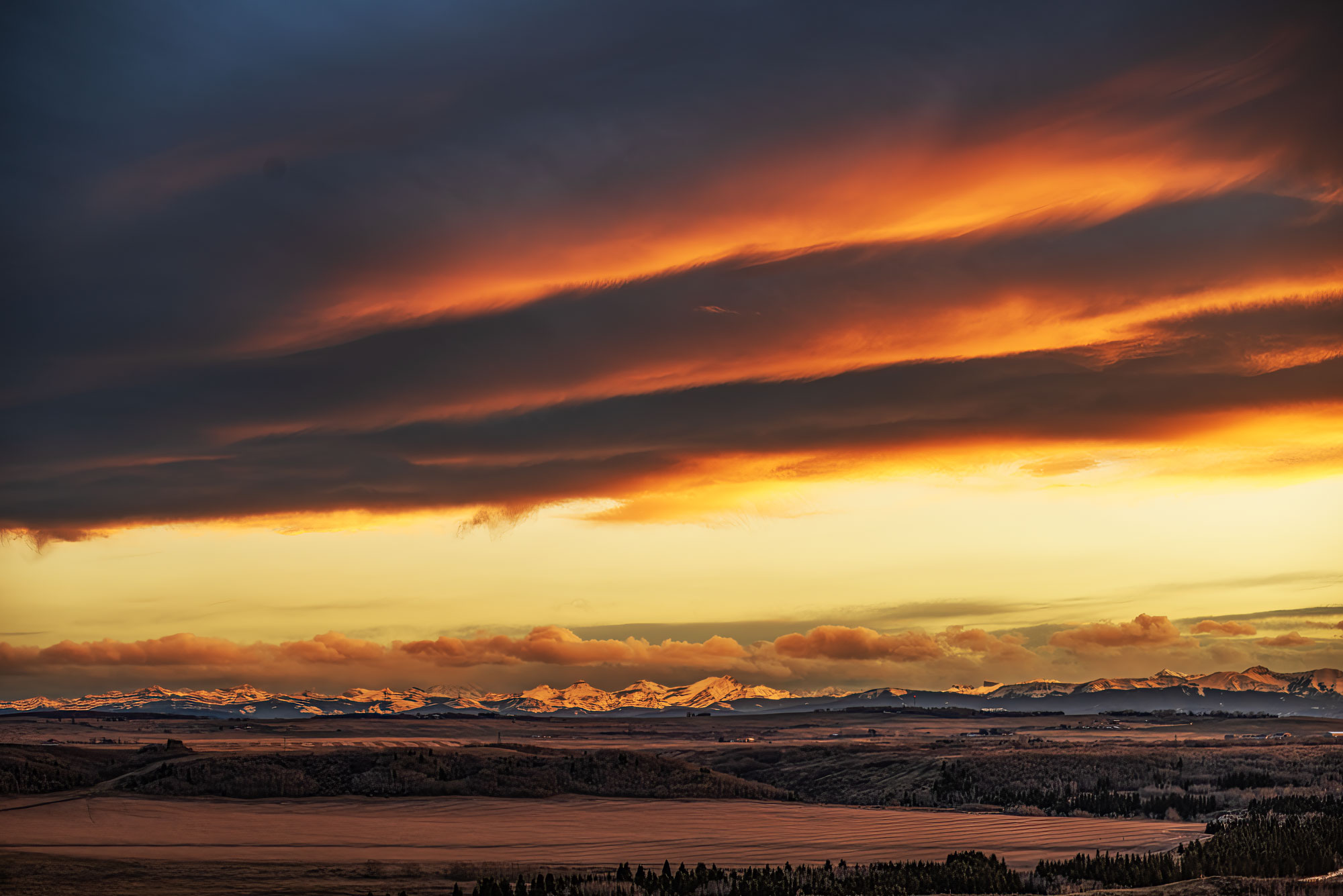
From a positioning standpoint, to capture the moon, stars, or sun transiting the clear sky band of a Chinook, you want:
Being a good distance east of the foothills is often a strong tactical position when dealing with a Chinook arch. Close enough to retain dramatic sky structure. Far enough to avoid the moon being swallowed by the clouds.
Under a Chinook arch, the challenge isn’t simply cloud cover, but distance and airflow. While that can reduce sharpness at long focal lengths late in the event, it also creates incredible drama and sky geometry that makes wider shots compelling.
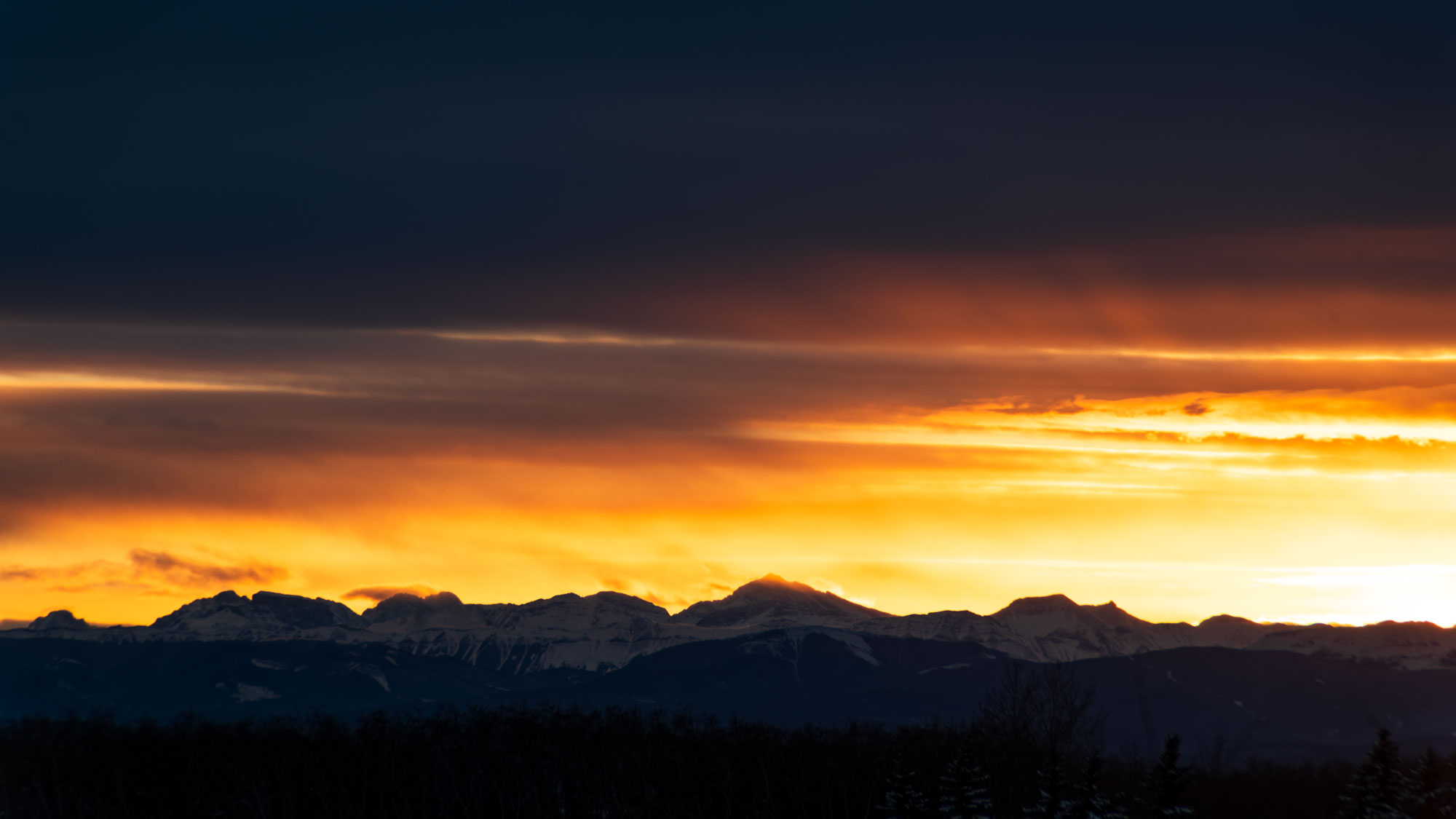
Once we understand that balance, we can use it rather than fight it.
Before you go…avoid frost and dew on your lens
A big part of any night shoot is keeping an eye on temperature and dew point. I often shoot in freezing weather, so I watch for frost on the lens, batteries losing charge, and temperature drops.
And don’t forget about radiative cooling…it can sneak up on you.
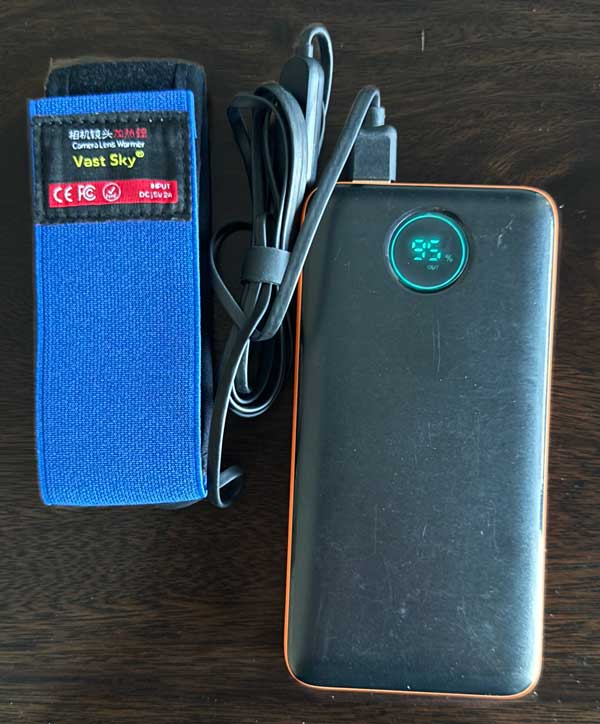
If frost or dew is likely, I bring both lens warmers and pocket warmers, and I keep spare batteries warm in my car or in my pockets. For long sessions, I pack a dummy battery so I can plug into a power brick or other power source.
And finally, bring snacks and drinks. You don’t want to be shooting for hours on end without properly fuelling your body. Especially if it’s cold.