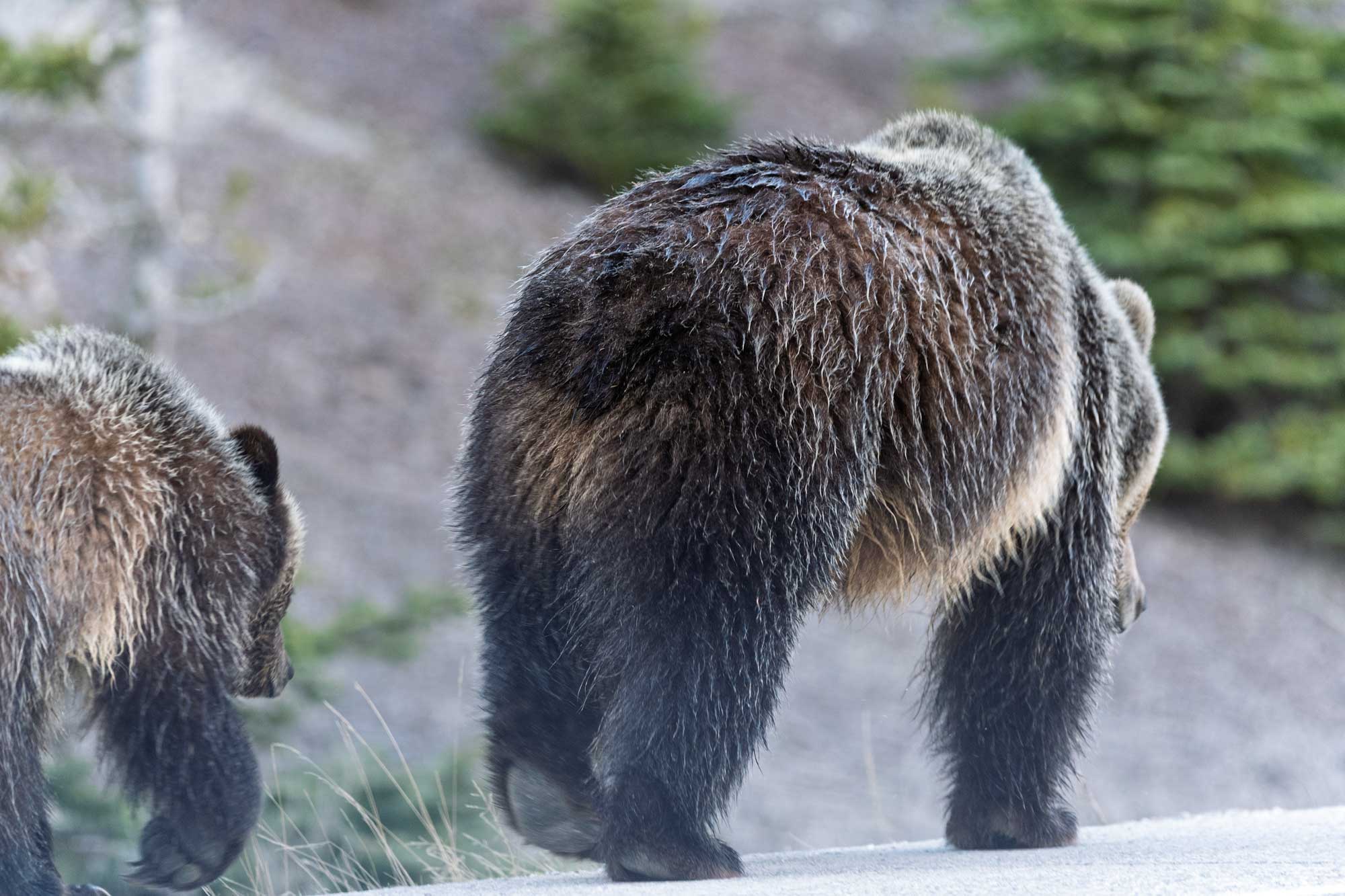
The grizzlies appeared as I came around a corner
The bears were already on the highway, walking across my lane and up the road on the far side. Chill and care-free. They were simply moving through the same stretch of road I was. Except it was their place long before it was mine.
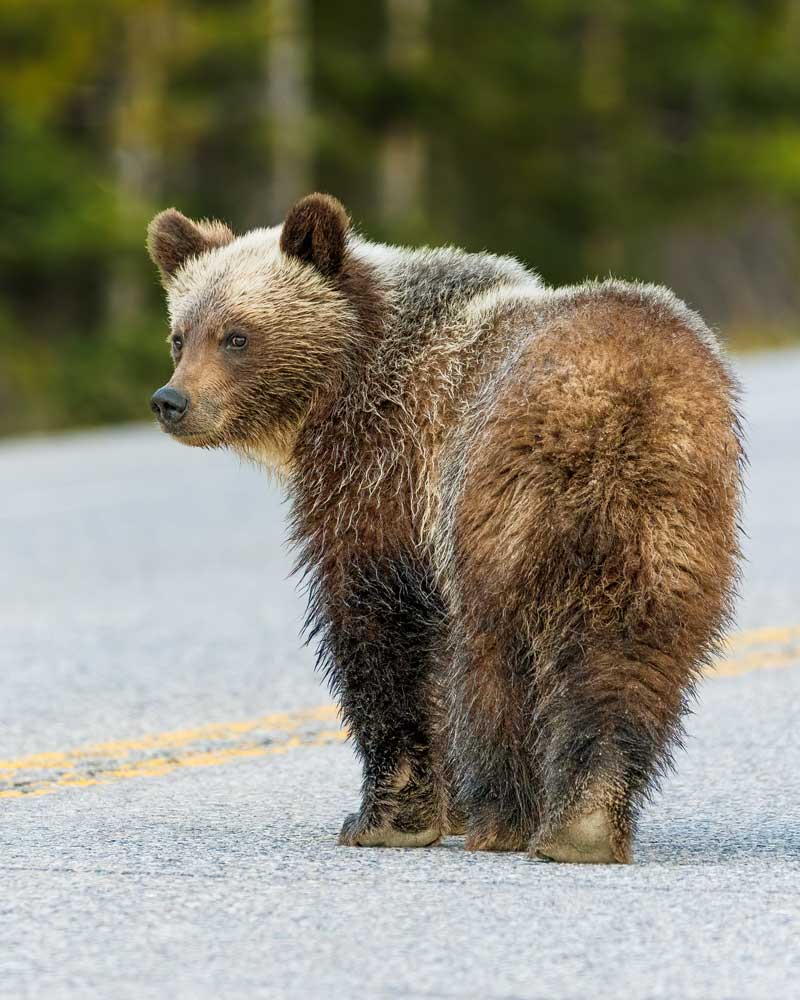
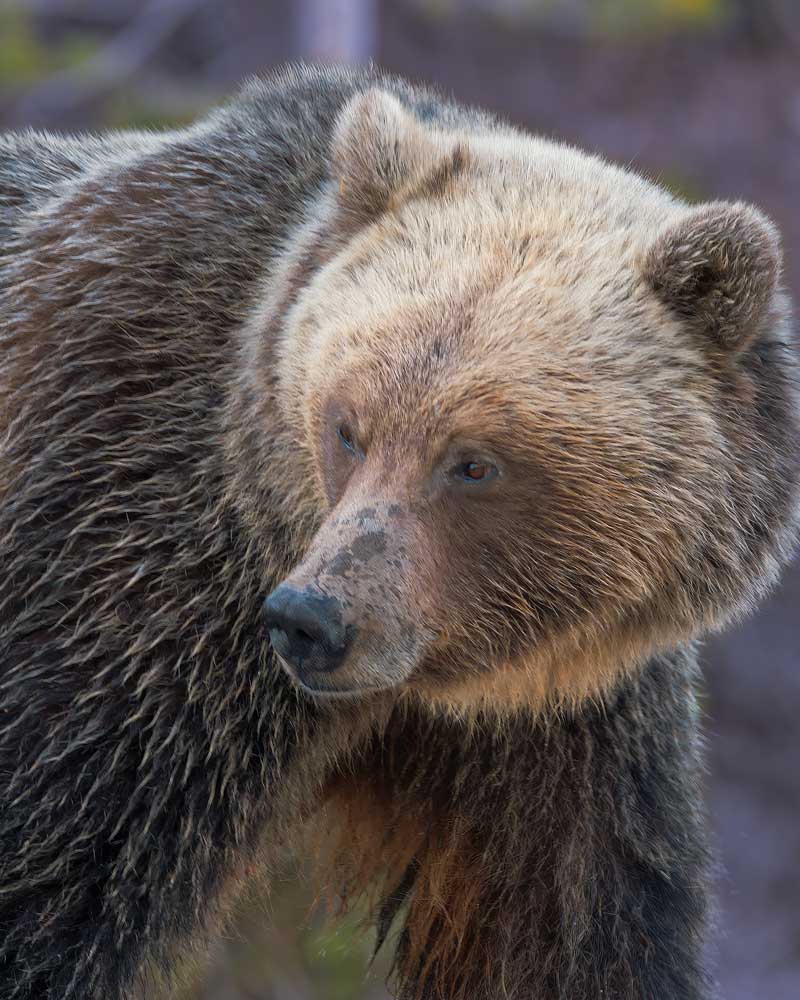
We stayed in the vehicle.
A small detail, but it changes everything. The images in this article were captured from inside the car with a long 150-600mm lens. I wasn’t outside the car. I wasn’t walking closer. And I wasn’t trying to get between the bears and where they wanted to go. My hazard lights were on, and the camera was doing what a camera is supposed to do: giving me reach without causing the animals to give up their space.
The grizzly bear sow and cubs gradually dropped into the ditch on the far side of the road, grazing on dandelions. I quietly moved ahead of them, about to drive off an let them be, when they began walking alongside me.
Such beautiful animals. The bear cubs were a good size, looking healthy. The sow looked great too, especially since they were fresh out of hibernation. They started walking past me, crossing back toward my side of the road.
I stopped and waited, hazard light still blinking. My companion and I whispering and snapping pics through the windshield, doing our best to remain quite and unobtrusive. It’s times like these when I’m glad I bought an EV. It runs so quietly.
That’s when a large 4×4 pulled up behind me.
Its engine was loud. But the people inside the cab were even louder. Excited voices, shouting, the kind of reaction that turns a wildlife sighting into a roadside event.
The sow noticed immediately.
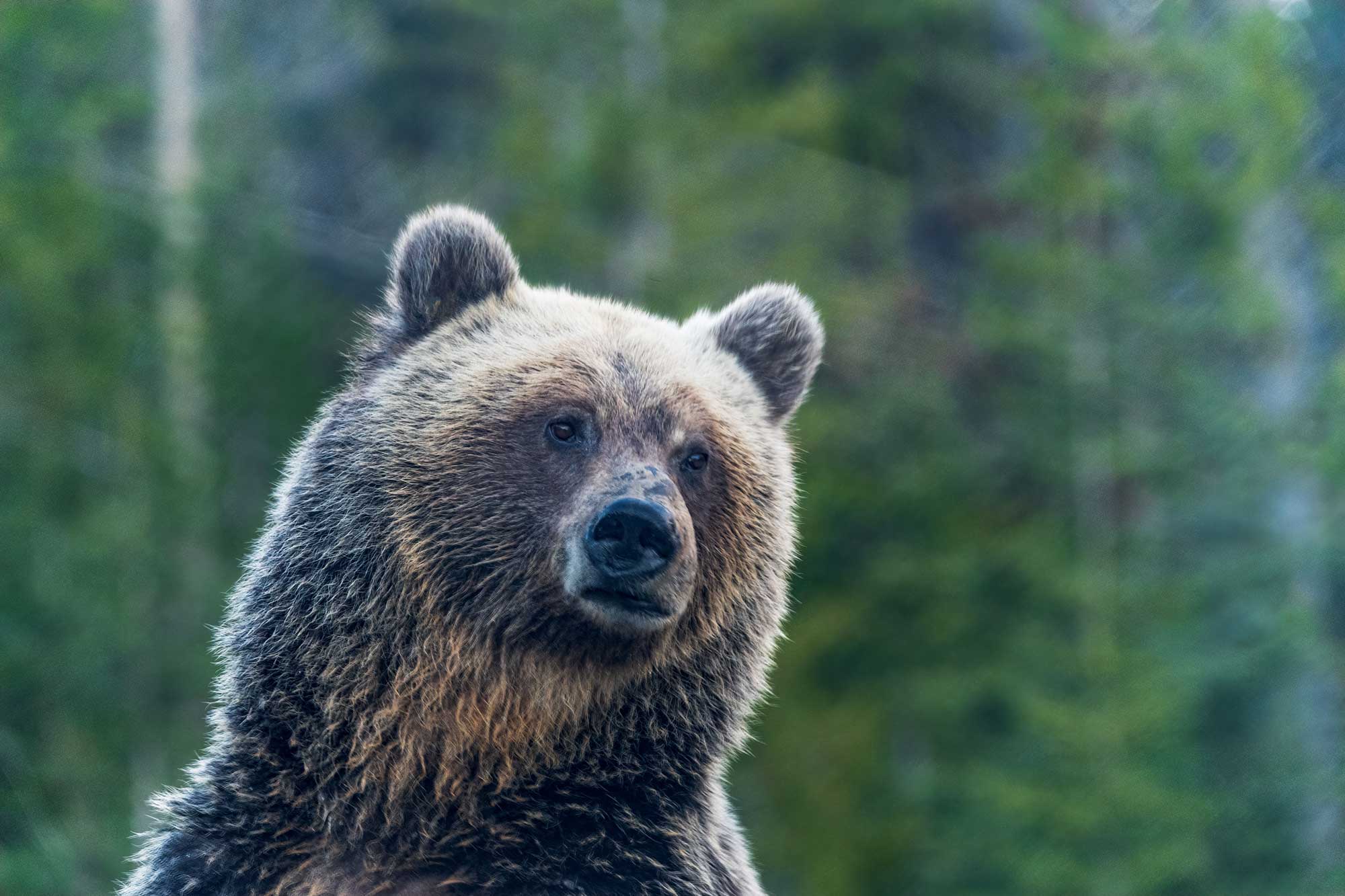
She stood up on her hind legs and sniffed the air. I cringed, embarrassed and ashamed that she’d been alerted due to humans behaving badly. It was obvious that she was trying to figure out what was going on.
That was enough for me. We left.
I didn’t leave because I was afraid of the bear. I left because the bear’s behaviour had changed. And, because people caused it. Just a few seconds earlier, she was moving casually along with her cubs, feeding. Then a truck load of ignorant people made themselves part of the encounter, so much that she needed to assess the risk. After all, she was watching over two babies.
That’s the line I never want to cross.
Most of my recent bear sightings have happened in Banff and Kootenay National Parks.
I’m intentionally vague here. Wildlife doesn’t need people searching for corners, pullouts, ditches, hillsides, or feeding areas because a photo I shot gave them a target. The point of seeing wildlife isn’t to get a location. It’s to appreciate that you’re in a place where these things can still happen.
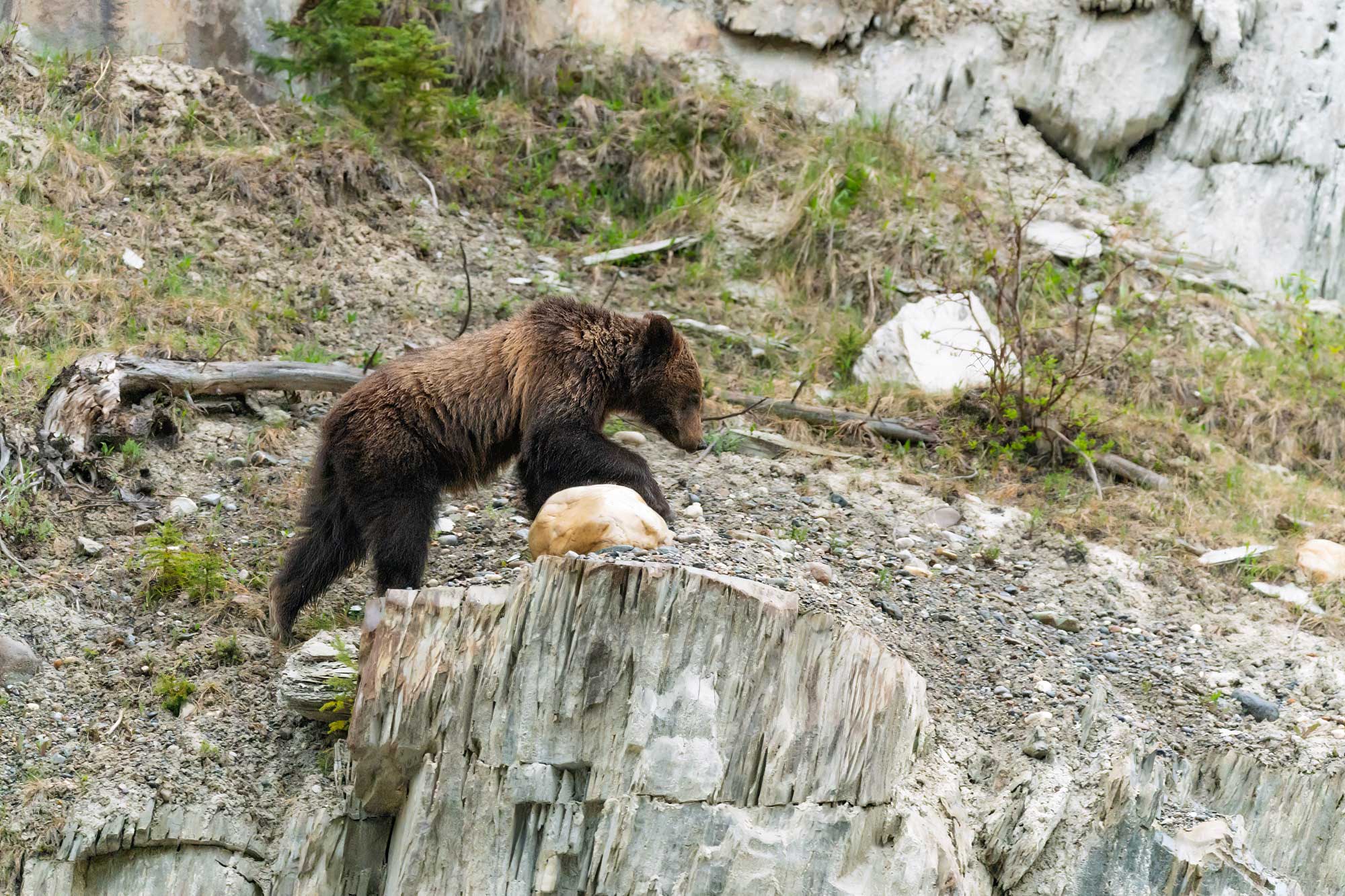
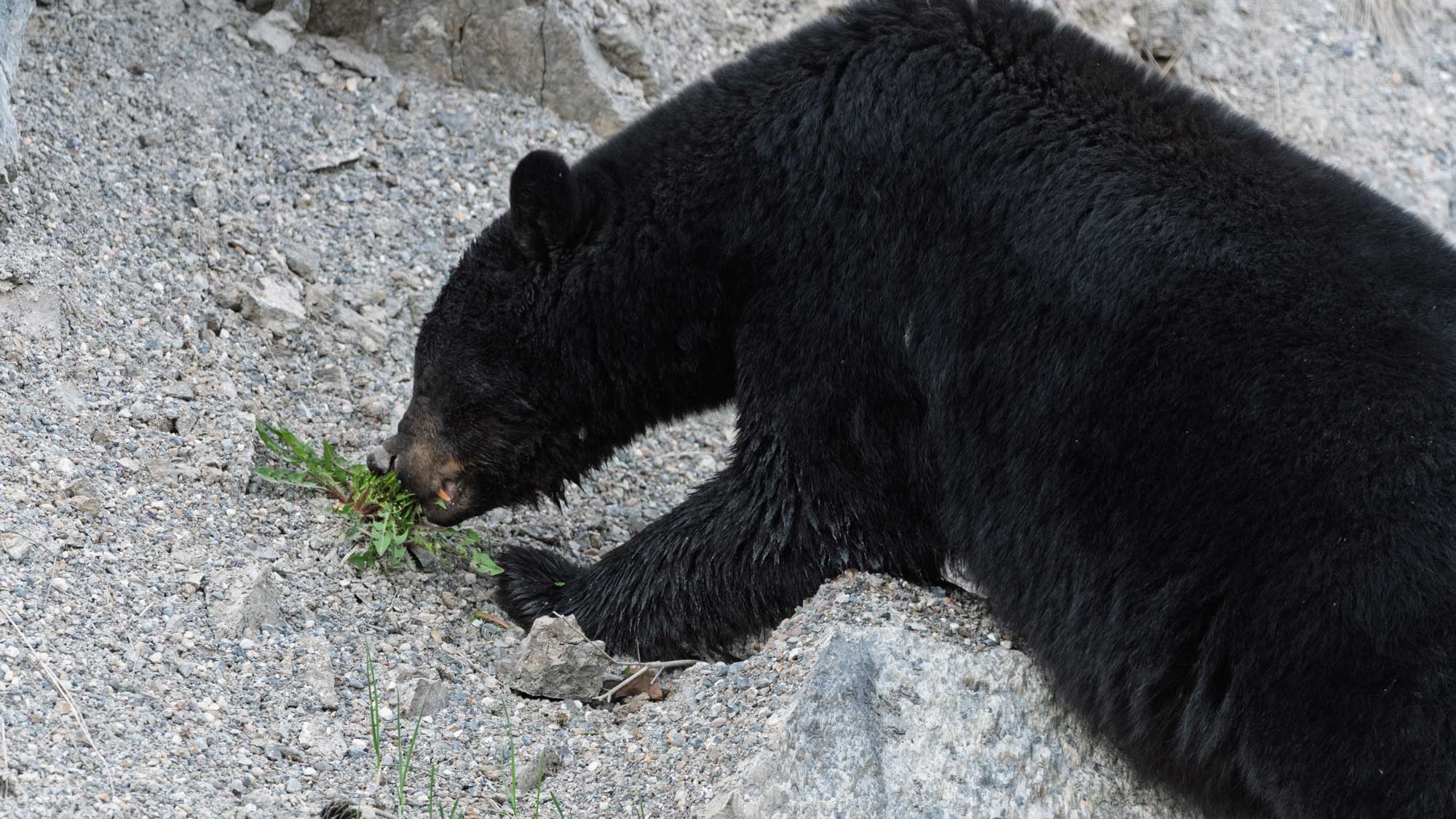
Another evening, I came across three grizzlies feeding on dandelions (they love these flowers) on a steep hillside near the highway. This sow looked a bit thin. But her cubs were nearly her size…probably last year’s young. The three were working their way uphill slowly, eating as they went.
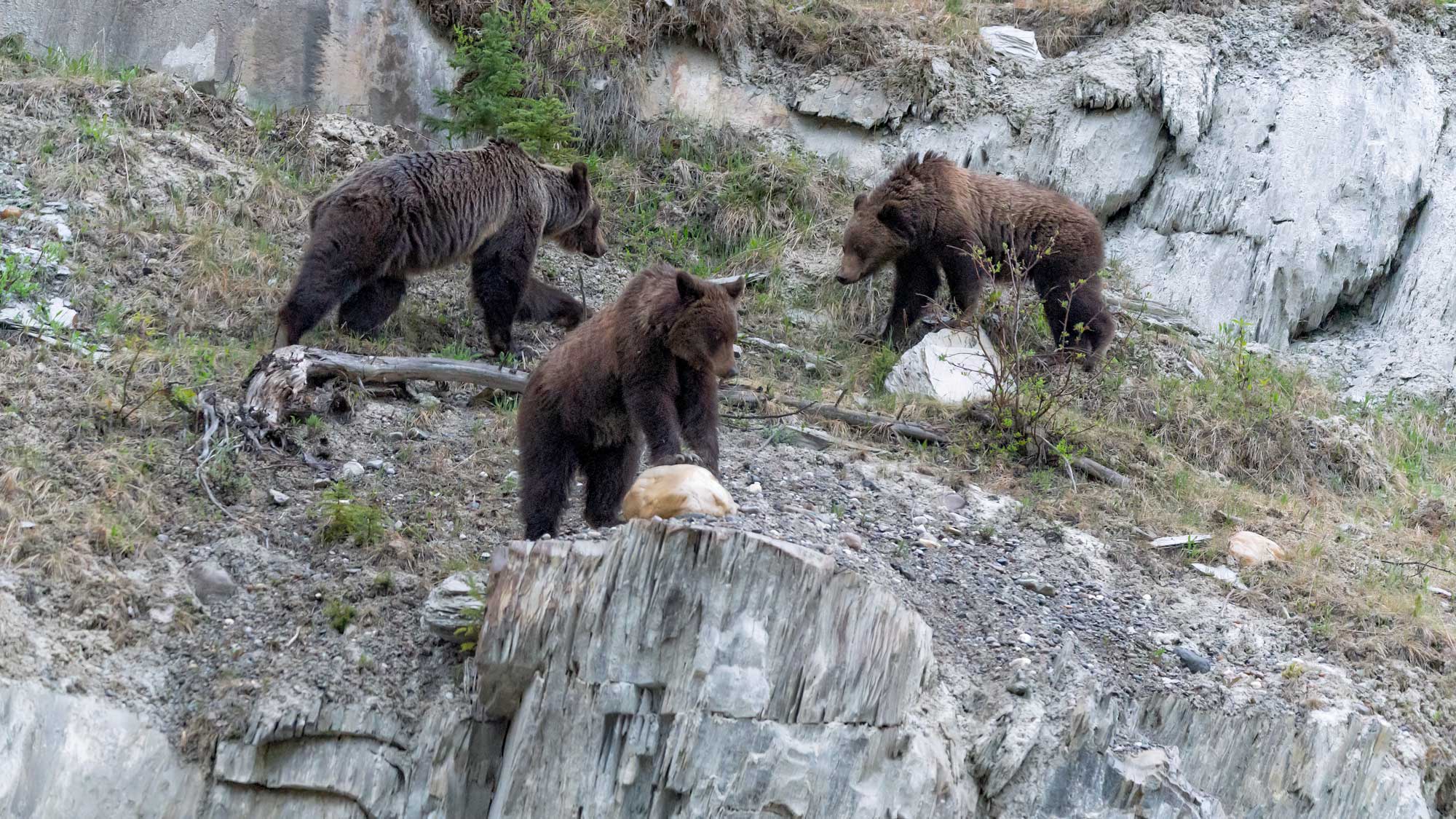
Then a truck stopped below them.
It wasn’t right beside the bears, but it was directly under them. That mattered. The cubs stepped onto rocky outcrops to peer down before the sow moved them higher and farther away.
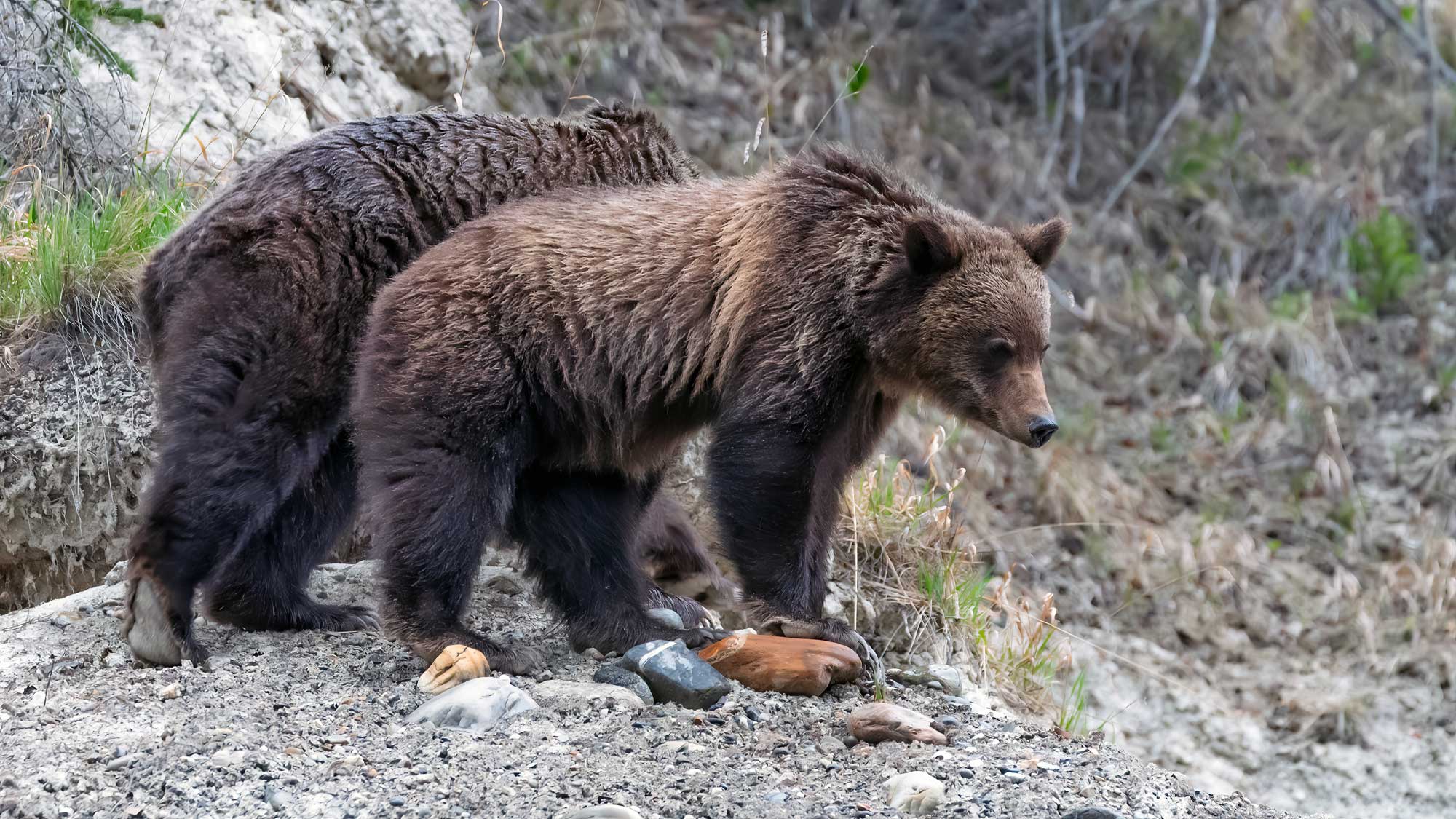
That’s something a lot of people miss. Distance is not only a number. Position matters too.
You can be far away and still be in the wrong place. If you stop under an animal, block where it wants to travel, crowd the road edge, or make it choose between feeding and moving off, you’ve changed a sighting into an encounter.
Parks Canada’s minimum recommended distance is 100 metres from bears, wolves, cougars, and coyotes, and 30 metres from deer, elk, sheep, and moose. Given these animals could be roadside, the rule I follow is, if I’m causing wildlife to move, I’m already too close.
That applies when you’re walking. It applies when you’re in a vehicle. It even applies when you have a long lens.
Shortly after leaving the grizzlies on the hillside, I turned a corner to see another bear.
This one was cinnamon brown. Almost orange. For a moment, I thought it might be another grizzly, which seemed strange given how close it was to the family group I’d just seen. Solo males can kill cubs to free up the sow for mating.
Then I looked more carefully through my lens.
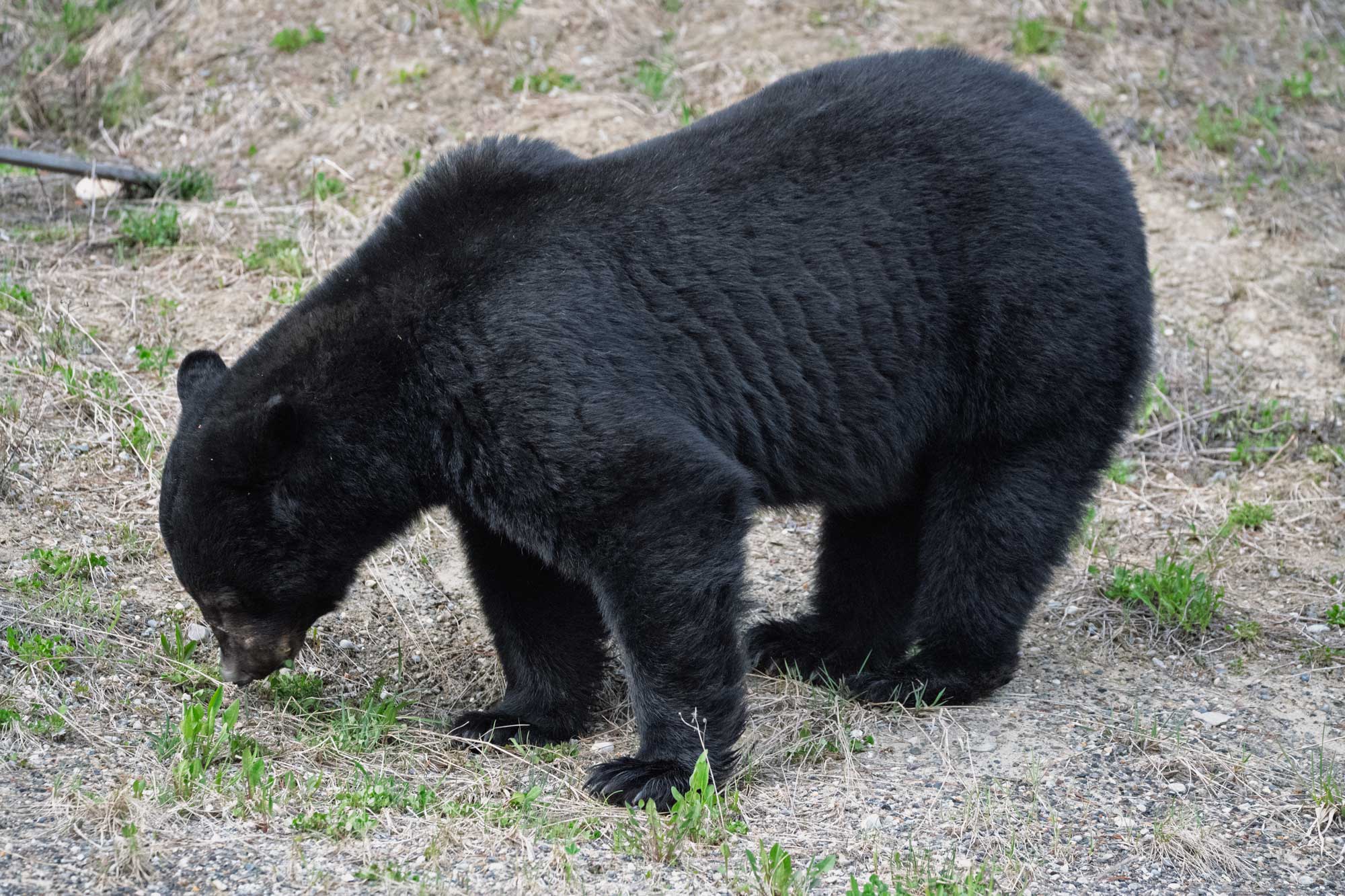
Its colour was odd. Its face was odder. It looked almost as if the bear was wearing a mask, except it wasn’t a marking. Its face was mostly hairless. Parts of the forearms too.
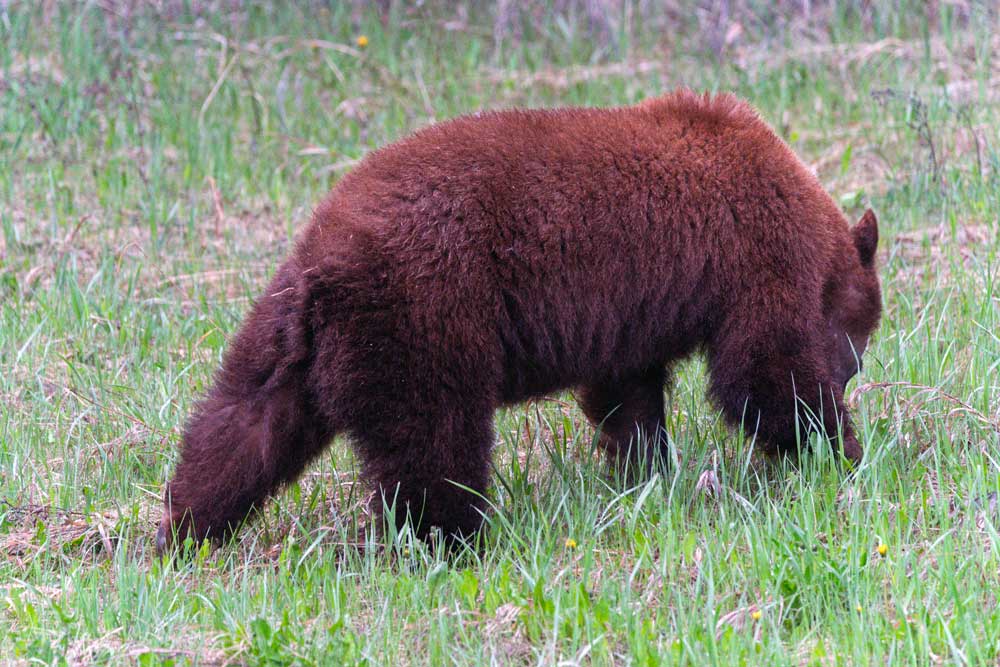
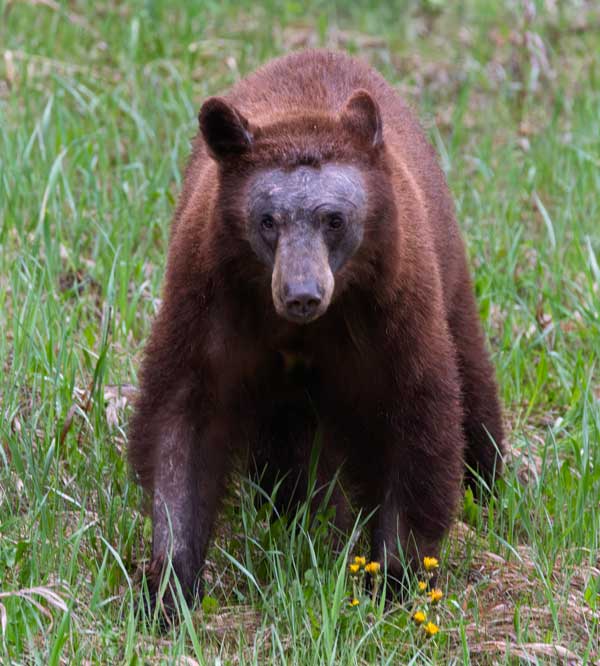
At first I wondered if it had come through a rough hibernation. Then I realized I wasn’t looking at a grizzly. It was a black bear. And an unusual one.
Likely very old. Maybe worn down by the season. Maybe something else entirely. I don’t know, so I won’t pretend to. But it was beautiful, even in its rough condition. Maybe because of it.
That’s one of the reasons I prefer using a long lens from a distance. You get time to be wrong, look again, and understand a little more without pushing closer.
Bears don’t need to look perfect to be worth seeing. They don’t need to perform. They don’t need to look at the camera. They don’t need to stay where we found them.
Most of the bears I’ve seen wanted the same thing: to keep moving, keep feeding, keep their cubs close, and avoid us.
That includes grizzlies and black bears. They can behave differently, and it’s worth knowing the difference. A grizzly charge is often defensive, especially if cubs, food, surprise, or limited space are involved. Parks Canada notes that defensive bears may charge, bluff, growl, snap their jaws, or show stress because they see YOU as the threat.
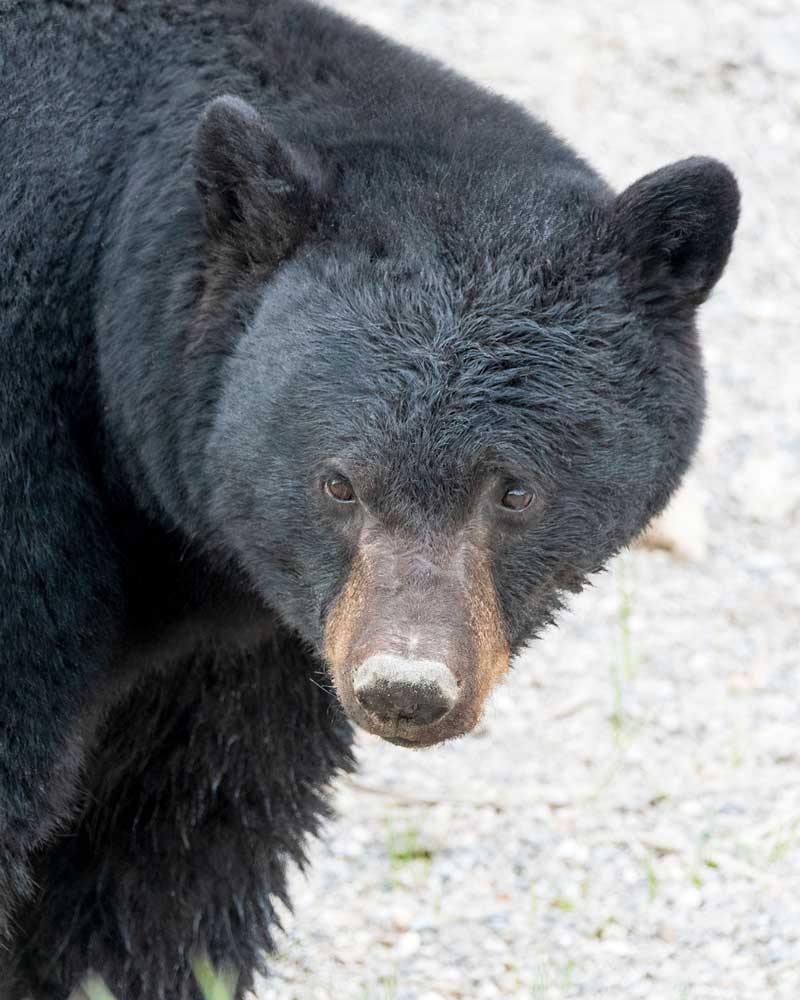
A black bear that is following, testing, closing distance, or staying focused on you can be a different problem. I think of it this way, carefully: grizzlies may charge to move a threat away; black bears that become dangerous may be more likely to press in. That’s not a rule, and it doesn’t mean either bear is looking for contact. It means the behaviour matters more than the label. In my view as someone who’s spent many nights in the wilds, they don’t want anything to do with us. Bears should be respected, not feared.
Either way, the best answer is not to create a problem in the first place.
That’s where being bear-aware matters. Not because it makes you brave. But because it helps you avoid being careless.
If you spend time taking photos where bears live, you need to understand how surprise encounters happen. Wind matters. Running water matters. Brush matters. Berry patches matter. So does the fact that photographers often move quietly without realizing it.
Quiet can feel respectful. In bear country, it can also be how you surprise an animal at close range.
Parks Canada recommends making noise, especially near streams, dense vegetation, berry patches, windy areas, and places where visibility is poor. They also say bear bells are not effective. Not news to me, but you’d be surprised how many hikers are wearing earbuds and blasting tunes to themselves while dangling bear bells as an encounter deterrent.
Here this: bear bells are useless, blasting tunes in your ears while the outside of you is quiet, is just plain dumb. You’re doing everything wrong. Everything. Plus, you’re missing out on the sounds of nature.
Do this instead:
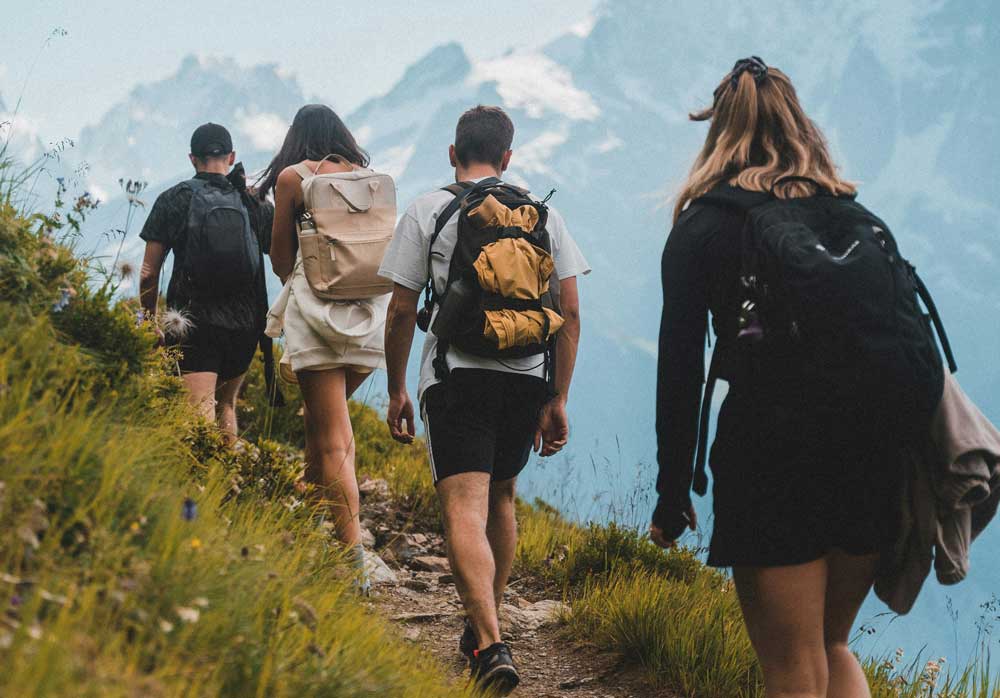
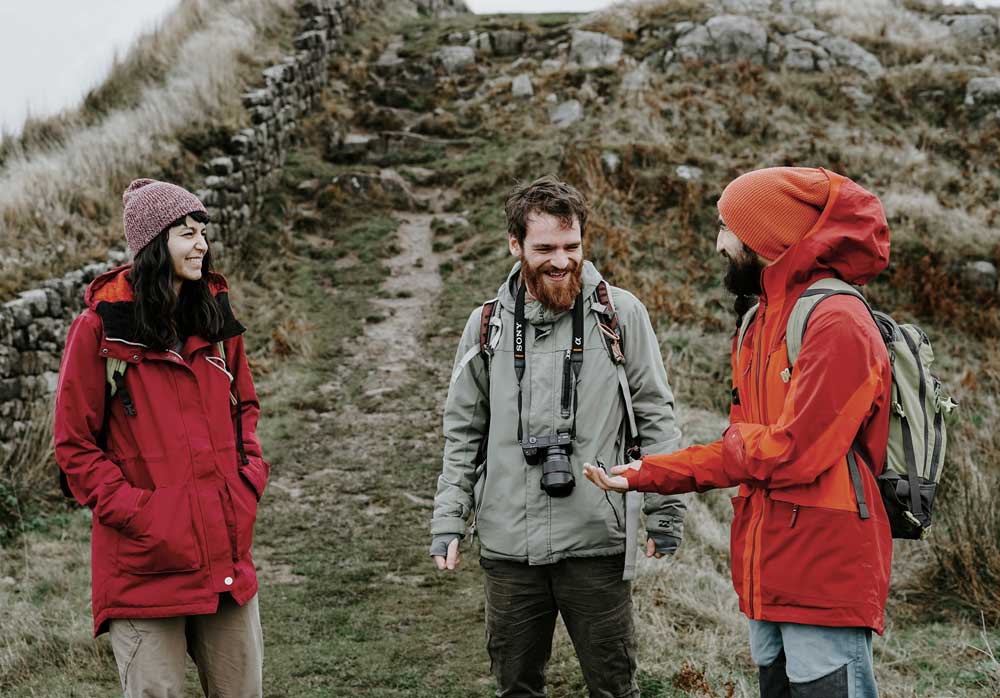
Your voice is the first tool. Talking, calling out, singing, or clapping gives wildlife a chance to know you’re there before you’re close. Alberta says the most effective noisemaker in bear country is you, and that with enough warning wildlife will often move itself (and its young) away before you ever know they’re there.
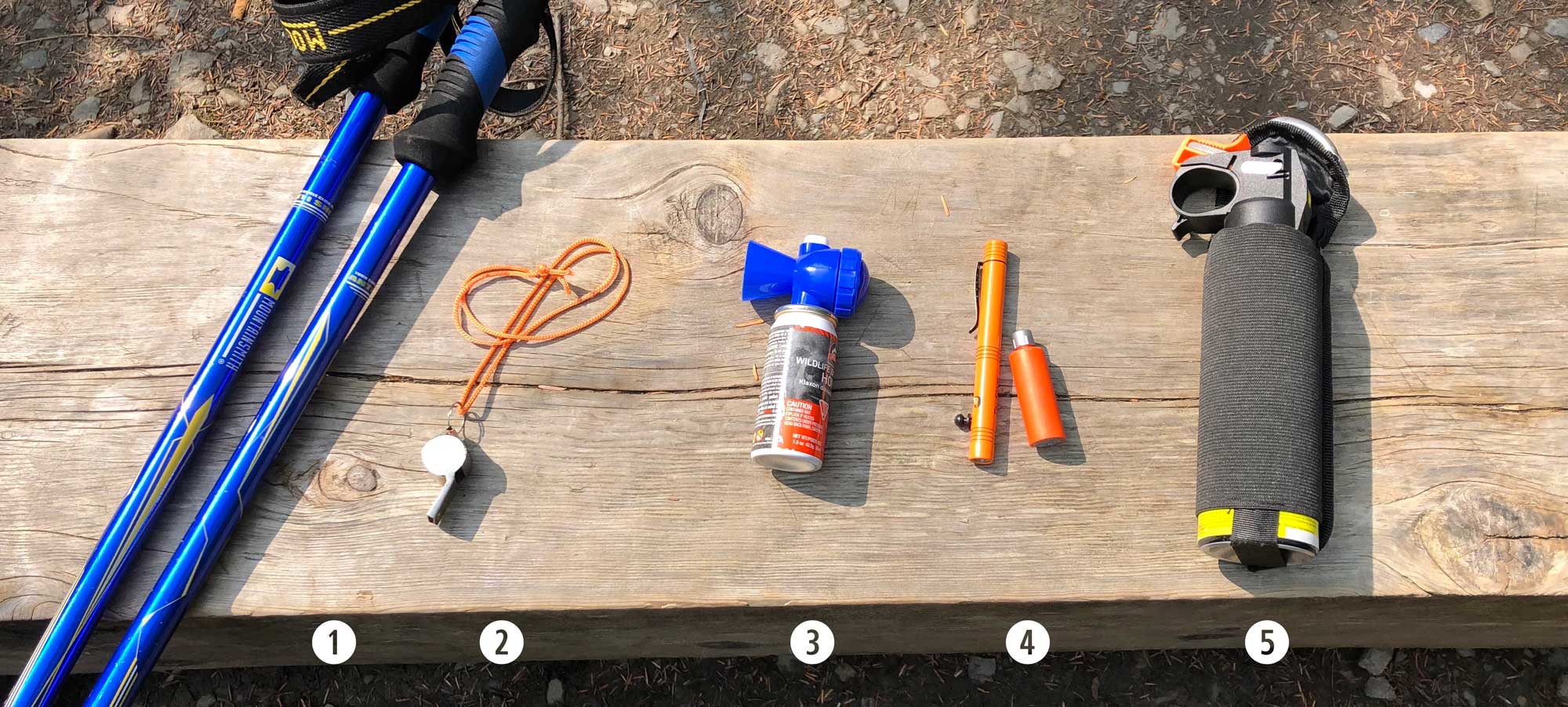
1) Poles help, but they’re not the same thing. They add sound on rock, gravel, roots, and brush. That can help keep you from moving silently, but poles don’t replace your voice. Consider singing.
2) A whistle has a real place. Voice doesn’t always carry. A whistle can cut through the roar of a stream, howling winds, distance, and heavy brush better than just talking. It’s also a useful signal if you need people to know where you are.
3) Air horns are loud. It’s a strong way to announce yourself when a bear may be in sight a fair distance away and may not know you’re there yet. Before making a sudden loud sound, you need to think about where the bear can go, whether there are people nearby, and whether you might push the animal toward a road, toward someone else, or back toward you. Yell at it first. Use your voice. Then blast the horn if there’s no response or if it appears to be ignoring you.
4) Bear bangers are essentially fireworks, and in the national parks I’m talking about here, they’re not part of my normal kit. Parks Canada lists bear bangers with firearms and says firearms, including bear bangers, are prohibited. Where bear bangers are legal, they still require care. Alberta says bangers create a loud bang after travelling 20 to 100 metres, and some whistle loudly. Don’t fire them at an animal. Instead, aim up at the sky so the bang happens above and between you and the bear. And, don’t use them in dry forest conditions because they can start fires. Finally, if it goes off behind a bear, it can send the bear toward you, so really take care with them.
5) Finally, bear spray is a close-range tool and last resort. It is not a confidence booster and it is not a reason to get closer. It needs to be carried where you can reach it fast, not buried in a pack. You need to know the range of your own canister, the wind direction, how to remove the safety, and how it feels to draw it from the holster. Alberta Parks recommends practising with an inert canister and knowing it’s ideal spray range before you need it.
Parks Canada says bear spray is for a bear approaching at close distance, with an effective range of about five metres. That’s really close and requires nerves of steel to hold off the trigger until the right distance. Alberta Parks’ guidance suggests aiming low in front of the bear first and then raising it slowly from just below the head or into the nose and mouth.
That’s the part people need to understand. Bear spray is not a big cloud you fire in the bear’s direction. It has to reach the bear’s face. Nose, mouth, eyes. If you panic and spray too early, you may waste it before it can help. If you just spray it in the bear’s direction, you can easily miss it. The tool only helps if you can stay calm enough to use it.
The same thinking applies beyond bears.
Elk, deer, sheep, moose, coyotes, wolves, birds, and smaller animals all need space. They all pay a price when people crowd them, feed them, block them, chase them, or turn a roadside sighting into a bear-jam. In a national park, it’s illegal to feed, entice, or disturb wildlife, and Parks Canada warns that human encounters can cause bears to change their travel, abandon habitat, react aggressively, become habituated, or in serious cases be destroyed because people did the wrong things.
That last part is the piece too many people skip. Our bad behaviour can quickly become the animal’s problem.
It wouldn’t be the Canadian wilds without the wildlife. That’s why I care about this. Wildlife aren’t props. They’re part of the reason the place still feels alive.
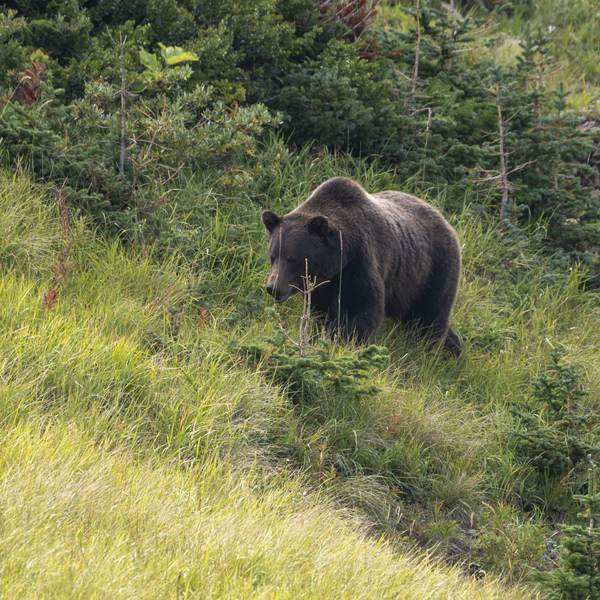
Sometimes I’ll get the photo. Sometimes I’ll leave before I want to. Sometimes my choice is to keep driving.
That’s fine.
The best wildlife encounter isn’t the closest one. It’s the one where the animal ignores you, keeps its space, has options, and doesn’t need to change what it’s doing because we showed up with a camera.