Two Nights When the Sky Just Wouldn’t Hold Still
Near Radium Hot Springs, just after 9 pm on April 17, we were set up on a muddy back road on the west side of the Columbia River valley.
The first green didn’t “arrive.” It was already there, spread wide and low, thin in places, heavier in others, stretching from east through south and wrapping west. No edge. No structure you could point to. Just coverage. You could tell right away it wasn’t going to stay simple.
Then the red cut in.
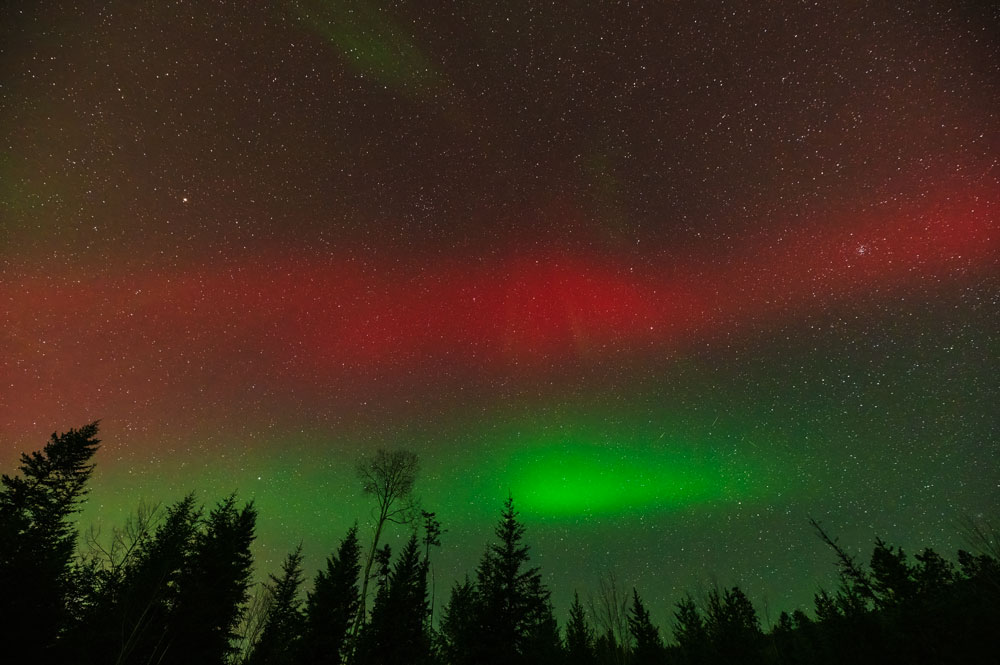
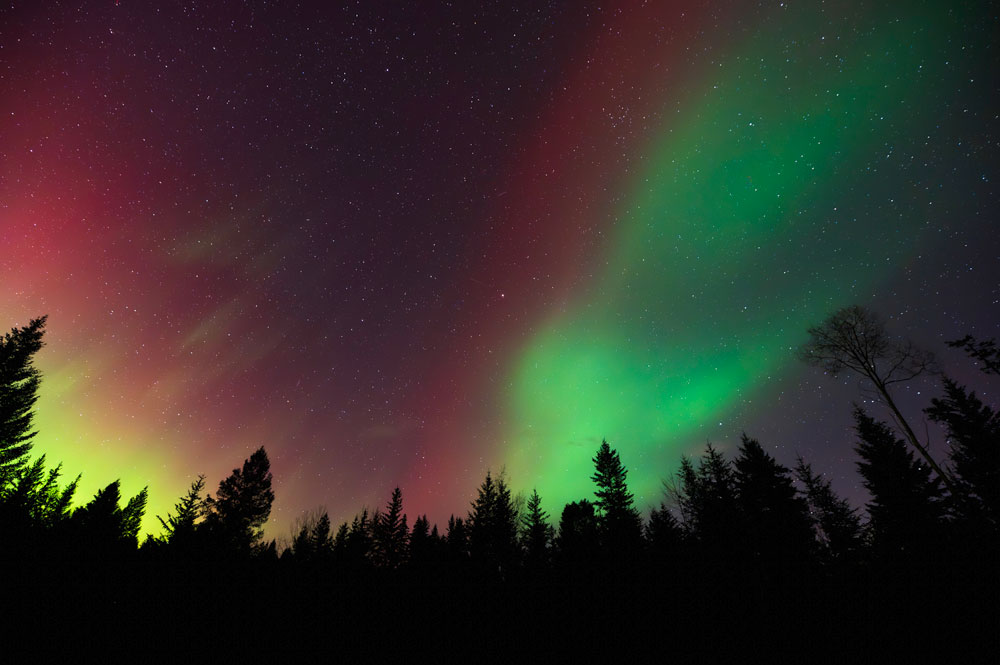
Not faint. Not subtle. A long, steady SAR arc sitting low across the horizon under the green. That’s when it separated into layers. The sky stopped reading as one thing and started behaving like multiple systems stacked on top of each other.
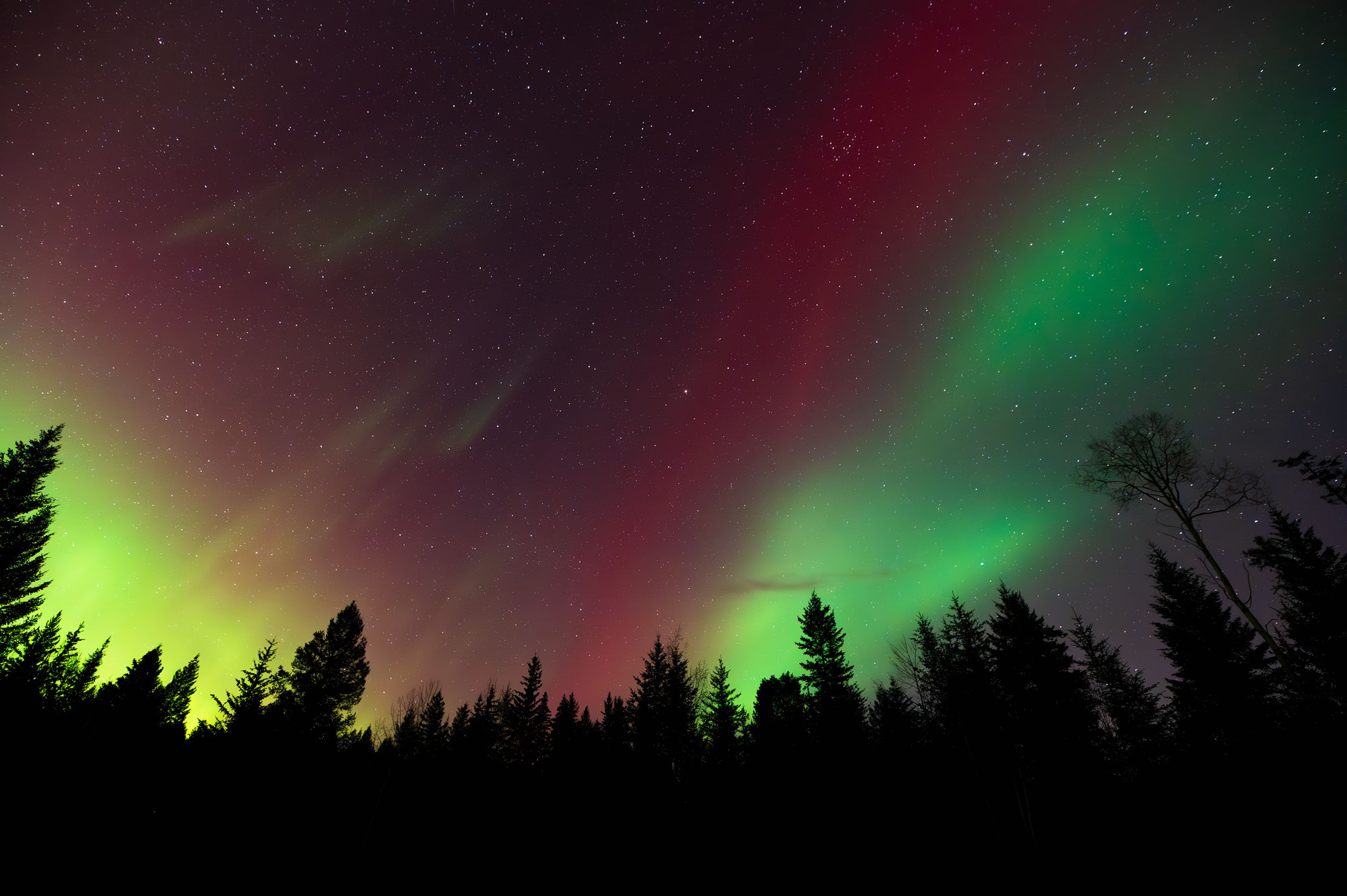
The green began to lift and thicken. It pushed upward into the red while at the same time breaking into structure. Pillars formed inside it, carrying red within them. Not above, not below. Inside. The colours weren’t cleanly separated. They were interfering with each other.
North and east turned active first. Tall, fast pillars, constantly rebuilding, never holding shape for more than a second or two. The west held that red arc, wide and steady, almost disconnected from the motion elsewhere. Overhead stayed softer, but you could see it organizing.
The edge between red and green kept failing. It would blur out, then snap into contrast, then break apart again. The green would push up into the red, then drop, then rebuild somewhere else. You couldn’t follow one feature. You had to keep scanning.
I started at 10 seconds. That lasted maybe a few minutes. As soon as the pillars sharpened and started moving, I dropped to 1 second to hold the structure. Anything longer and it smeared. From that point on it was continuous. No waiting. No gaps. Just keep the sequence running and adjust as it changed.
At peak, it wasn’t a scene. It was multiple scenes at once. A low red band holding in the west. Fast vertical pillars in the north and east. Softer green overhead starting to form something but not committing yet. Every direction gave you a different version of the same event.
Then it let go.
The pillars dropped out first. Motion slowed. The red lost intensity. Everything flattened into a more even glow. After about 90 minutes, there wasn’t enough structure left to justify staying on it, so we packed up.
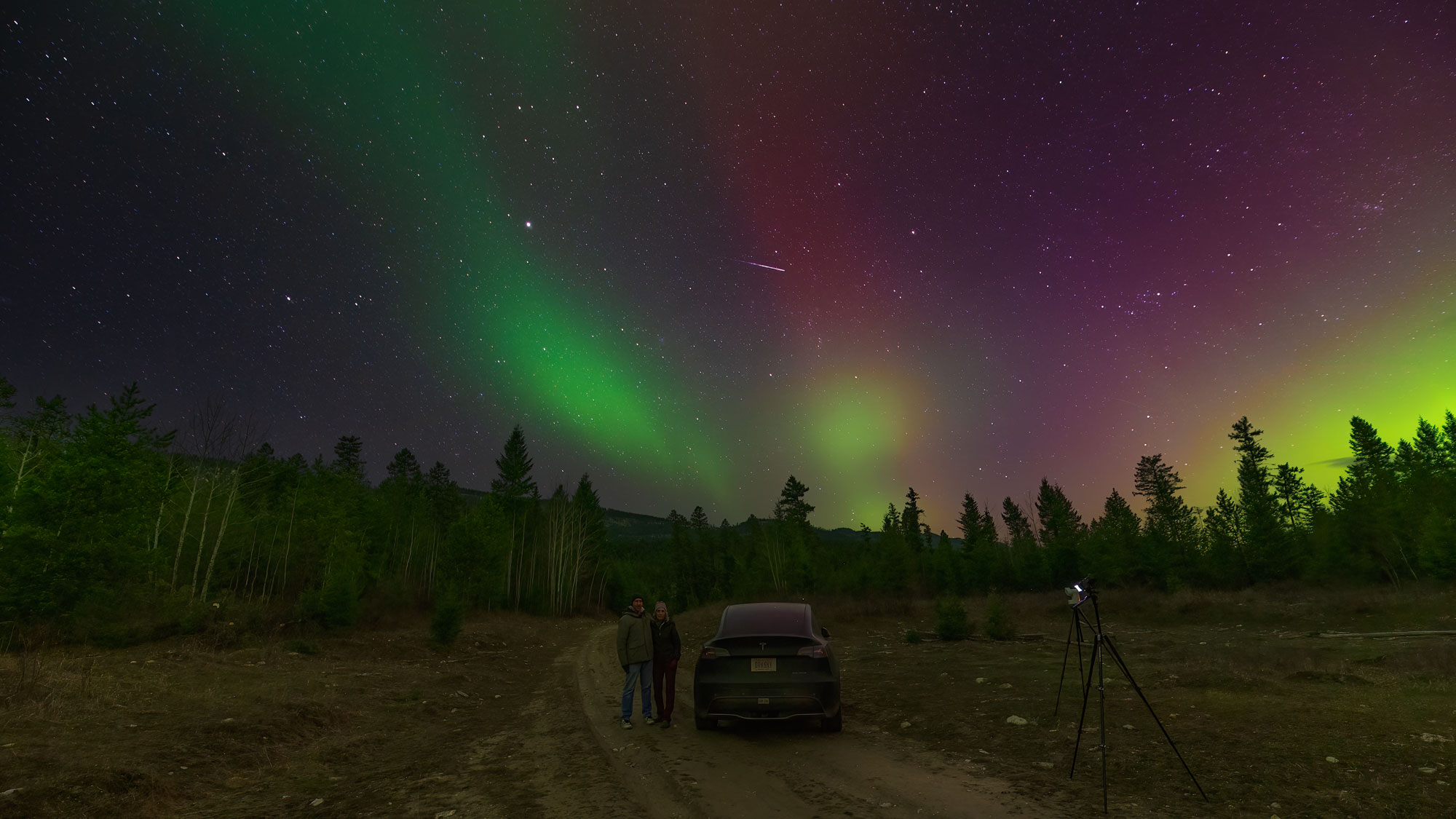
Then we headed home. Once parked, we looked up.
Straight overhead, everything pulled tight into a corona. All that stretched structure from earlier collapsed into a single point above us. Rays converging, pulsing in place. No lateral movement anymore. Just expansion and contraction.
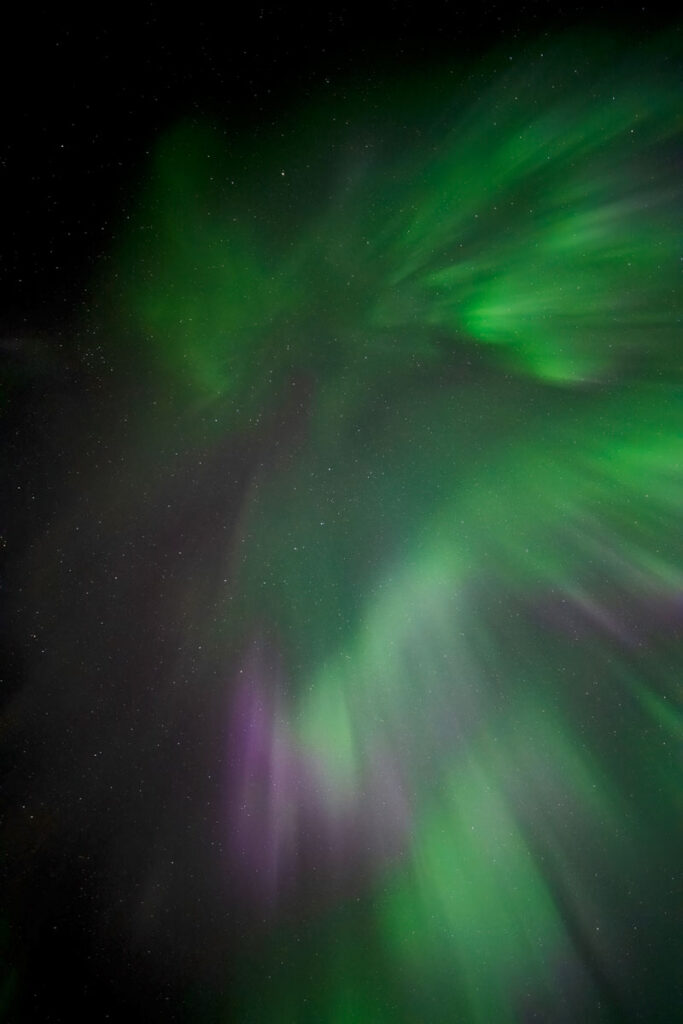
Same exposure approach. Keep it short. The motion inside the corona was fast even though it looked contained. It didn’t feel like a continuation. It felt like the system reset and started over in a different configuration.
We stayed another hour, then called it.
The second night at Columbia Lake started flat. Faint glow to the north over Fairmont, mostly hidden by a low cloud band. It didn’t look promising. Easy to walk away from.
We started packing.
Then it built fast.
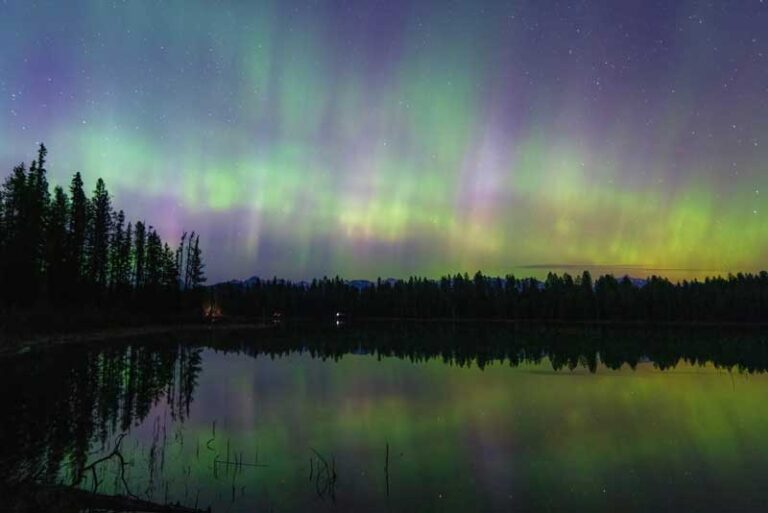
Pillars came up over the mountains, tight and close together, forming a crown almost immediately. Red and purple sat higher this time, above a strong green base. The structure was compact and vertical. No spread. No full sky coverage. Everything pushed upward in one direction.
The movement was quicker, but contained. Columns flickered, collapsed, rebuilt, but stayed grouped. It didn’t surround us like the first night. It presented itself.
Across both nights I ran two cameras almost non-stop. Around 2800 frames. Not a goal. Just what it took to stay with it.
What sticks isn’t how strong it was. It’s how quickly it refused to be one thing.
Wide, diffuse coverage turning into layered interference. Full sky collapsing into a corona. Then the next night compressing into a tight crown over the mountains.
It never settled into a single read. You had to keep adjusting with it the entire time.
The aurora is a big reason I love night sky photography. I hope you see her too.