About those Moments
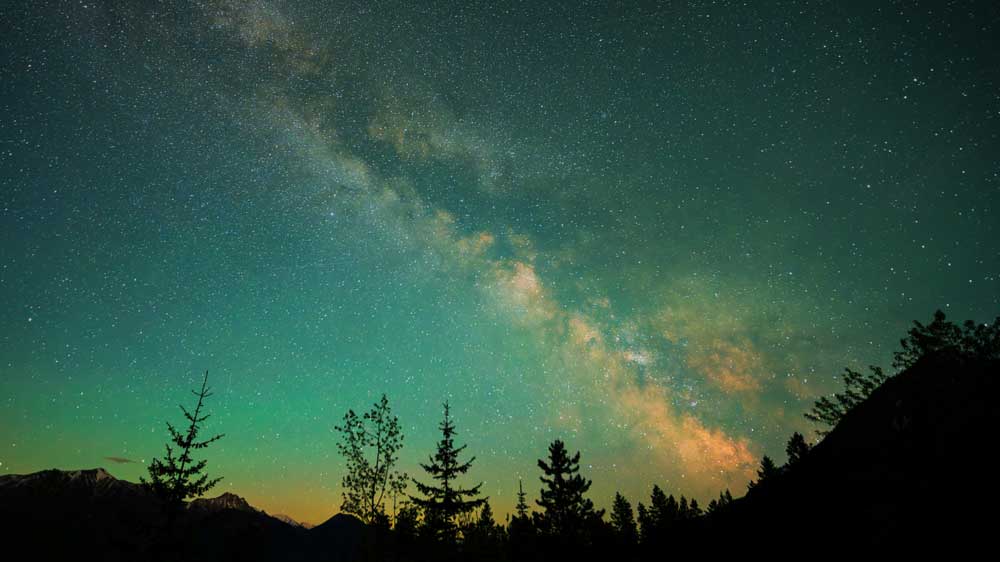
Most of my Milky Way images include a good part of Earth.
I like the relationship between the foreground and the sky. The foreground gives it a sense of place while the Milky Way provides scale. They can feel like two very different parts of the same image.
Physically, they’re not as separate as they might look.
The light reaching my camera from the horizon has travelled almost no distance at all. Some of the light behind it could have been travelling for hundreds or even thousands of years. For the few seconds my camera’s shutter is open, both arrive at the same time.
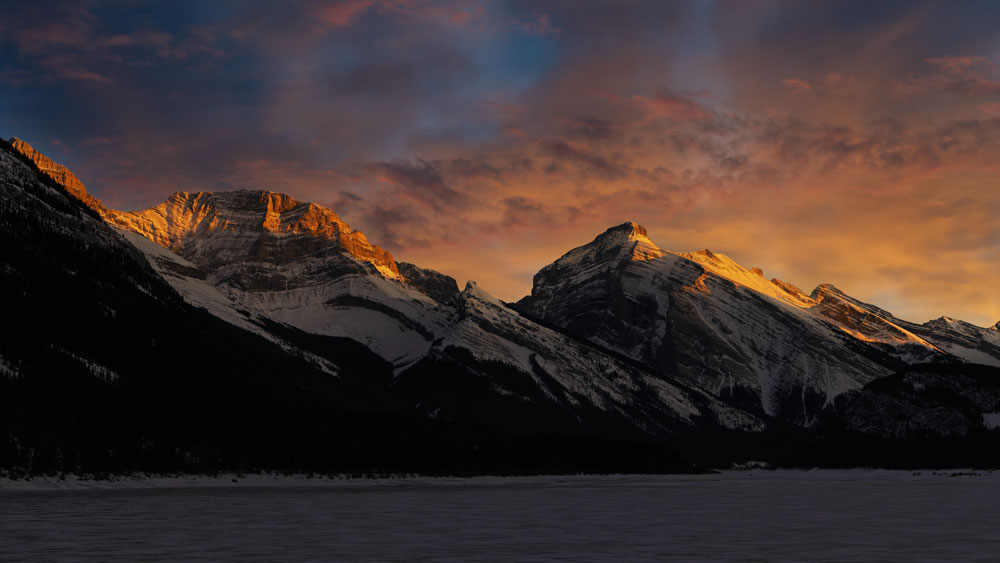
I’ve spent a lot of time thinking about that light. Where it comes from, how much of it reaches my sensor and what happens to it along the way. That’s a big part of taking photos at night.
What I hadn’t thought much about until recently was the back story behind what I was capturing.
The ground under my tripod existed before the mountain did. The rock, older still. Some of the elements were here before the planets. Many of which could only have been made in the stars that lived before our Sun.
Thought of that way, the foreground and the sky aren’t so different.
The connection isn’t just what we see. Go back far enough and they share real history.
The early universe was mostly hydrogen and helium. Many of the heavier elements came later, made in stars and spread through space as those stars were born and died. Over billions of years, some of that material became part of other stars and planets.
Including ours.
What interests me is what happened to all of that after it got here.
The rock hasn’t always been under foot. It may have been somewhere else in the Earth for hundreds of millions of years. It may have been lava or sand at the bottom of a sea. Long before the rocks became a mountain, its ingredients were part of the material that formed our planet.
What appears as a huge unmoving mountain is actually just temporary.
Temporary applies to what’s overhead too.
Our Sun is changing hydrogen into helium as I write this. Other stars have done the same thing, sometimes going on to make heavier elements. Stars also shed material. Some of it ends up back in space, where it can become part of something else.
This isn’t just material moving around. It’s being transformed.
Sometimes the change is familiar. Water becomes ice. Rock melts. Molecules combine or break apart. Yet, the atoms are still the same atoms.
Stars take it farther. Nuclear reactions change the atoms themselves. Stellar processes create heavier elements. A small amount of mass can become energy.
Follow any piece of matter back far enough and it becomes the same thing.
We just see the form it has now.
A mountain is a mountain. The Sun is the Sun. I’m standing behind a camera.
Those descriptions are all correct, but they’re current. Now.
That’s something photography is particularly good at doing. It takes whatever is happening during an exposure and gives it a fixed form. Even if it’s deleted moments later, that image lived much longer than the moment it recorded.
The universe doesn’t stop for the shot.
An image says: this is the Milky Way; this is a mountain; this is a sunrise.
Physics says: for now.
I like that.
Because of that, I can return to the same spot days or years later and capture another image with ‘almost’ the same foreground. On our timescale, very little has changed.
Extend that timescale and things are very different.
The landscape changes. The atmosphere changes. Earth changes. What looks permanent to us only needs to last longer than we do to earn the description.
The sky works the same way, only the time frames can be enormous.
There’s another wrinkle in all of this that’s easy to overlook when capturing an astro image.
I’m not actually capturing any of those distant subjects.
I’m capturing their light.
That light may have left a star long before I was born. By the time a photon reaches my sensor, the place it came from may already have changed – or disappeared. Go far enough into space and we’re seeing things not as they are now, but as they were when their light started travelling in our direction.
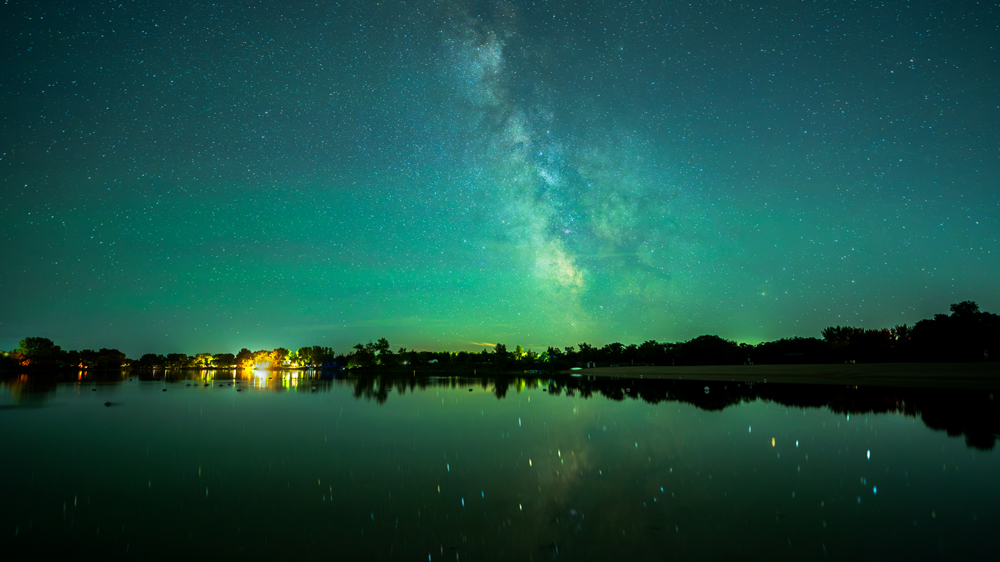
That’s normal in astronomy. It’s also a strange thing to think about while standing behind a camera. But the nights are long – lots of time to think and dream.
The foreground and sky share the frame, but not the same moment.
The sensor doesn’t care. It collects whatever photons arrive while the shutter is open.
Those photons contain history and story.
We can learn about the temperature of a star from its light. We can find elements by looking at the wavelengths they absorb or emit. We can measure motion. We can see gas glowing in a nebula because of what’s happening in and around it.
For an nighttime photographer, much of that information is simply ‘the image’.
Colour that my eyes can barely see appears as the exposure lengthens. Shapes appear out of what look like darkness. A patch of sky that seemed empty turns out not to be empty at all.
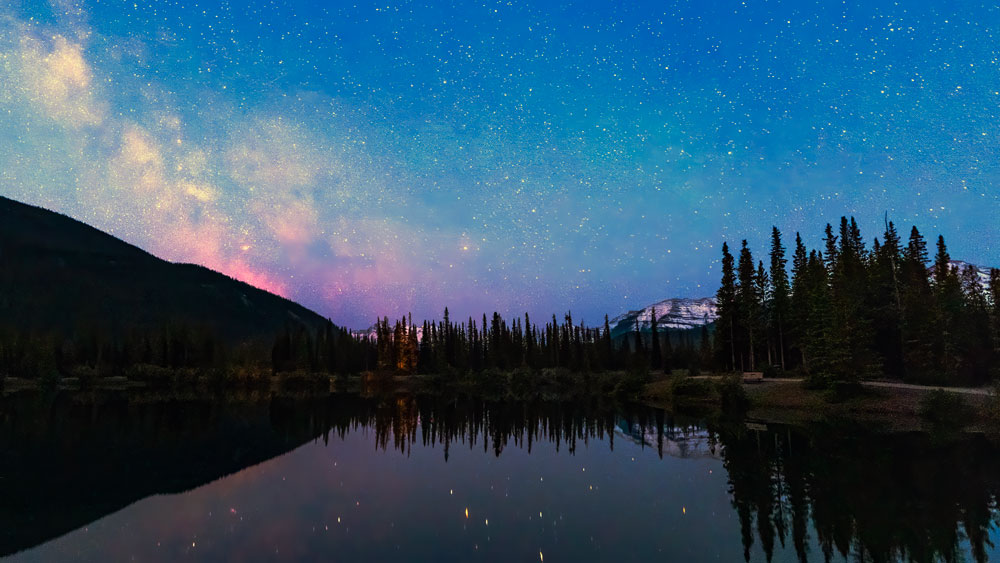
That’s one of the reasons I enjoy this type of photography.
The camera shows me (us) more than can be seen just standing there.
Now I find myself wondering about what it can’t show.
It can’t show the history of the silicon in the sensor. Where the iron in the rock was a billion years ago. What the material in a star will become after the star is gone.
We see what’s current. Now. At the time of the capture.
Transformation is harder to photograph when it lives longer than we do.
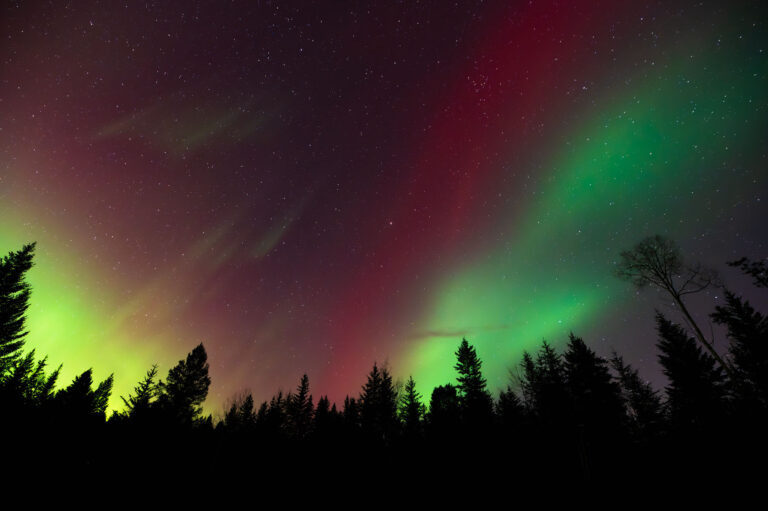
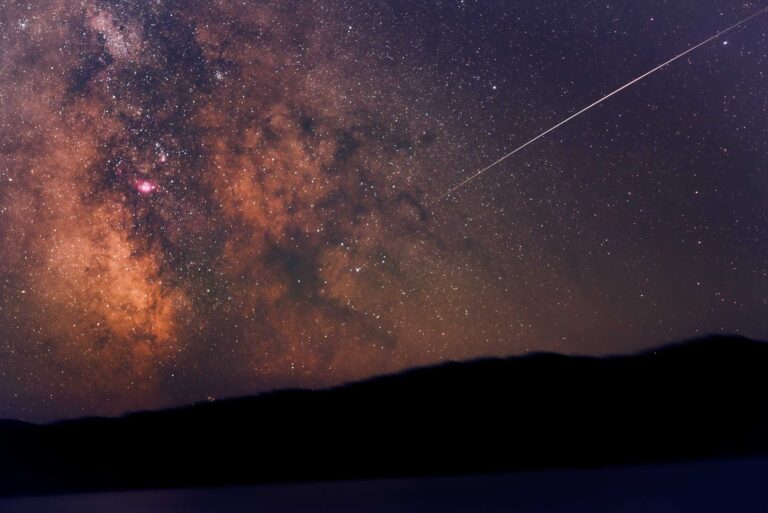
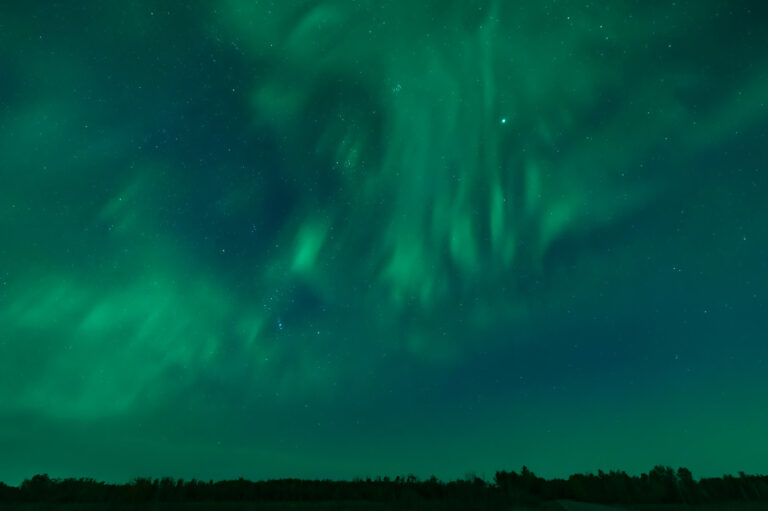
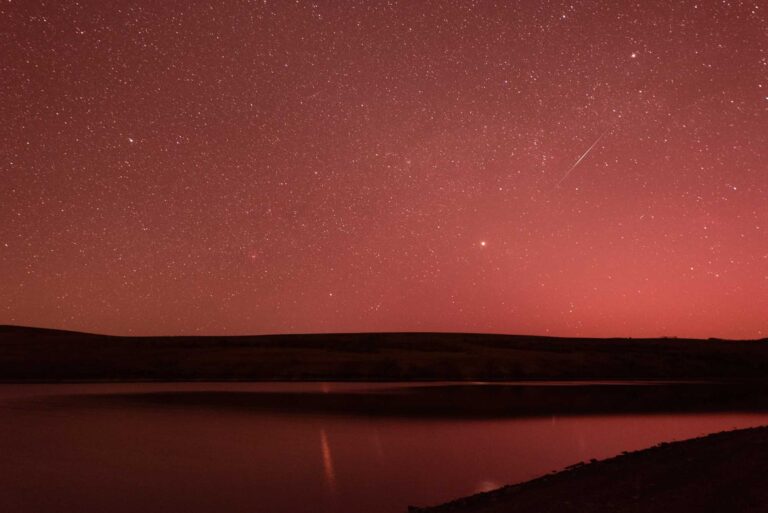
There are exceptions. Aurora can change in seconds. Clouds move through the night. A meteor appear sand disappears before we’ve had time to react. We recognize those as events because they happen on a timescale we can grasp.
A mountain changing over millions of years doesn’t feel like an event.
Neither does a star changing over billions.
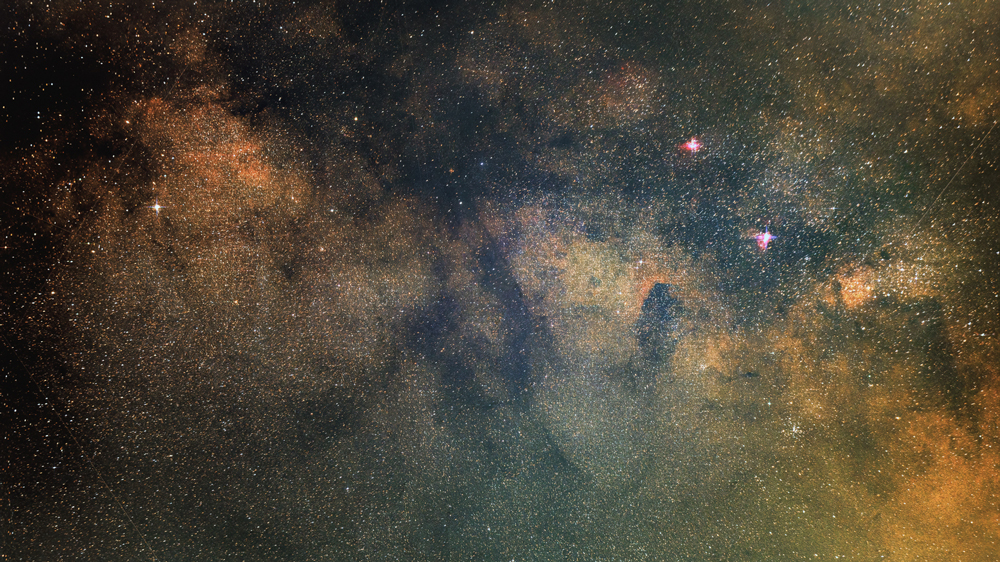
But the difference is ours.
Time-lapse photography is a simple example. Compress an hour into a few seconds and clouds race across the sky. Stars sweep around the pole. Shadows move. A scene that looked almost still suddenly isn’t.
We can’t make a time lapse long enough to watch a mountain disappear or the Sun age, but the principle isn’t all that different. Change the timescale and our idea of what’s fixed changes with it.
That brings me back to the material in the images we capture.
Where does it go?
Following it backward is difficult enough. Following it forward is mostly beyond us.
The Sun won’t always be the Sun we know. Earth won’t always look like Earth. The Milky Way is changing too. Continuously.
The material involved doesn’t have a schedule we can follow from one named object to the next. It responds to whatever happens around it. Gravity gathers it. Collisions move it. Heat changes it. Nuclear reactions turn it into something different.
Some of it may remain in one ‘kind of’ place for billions of years. Some may travel huge distances or become part of things that don’t even exist yet.
I find that last part fascinating.
Not because it needs any big meaning attached to it.
It has already happened.
The heavier elements around us weren’t present at the beginning of the universe. They were created. They got from wherever they were made to become part of our Solar System.
After that came Earth and the Moon.
Much later came us.
And cameras.
The silicon in the sensor collects that light. Metals in the tripod holding it still. Glass directs the light onto the sensor. All of it made from elements with histories that started long before anyone thought of making a camera.
I’m part of the capture in the same way, even when I’m standing behind it.
The calcium in my bones, the oxygen I’m breathing, and the carbon that makes life possible didn’t begin with me.
I knew this, of course.
Most of us do.
But knowing a fact and seeing its implications in something you do regularly aren’t quite the same thing.
I used to look at a Milky Way image and see the relationship between land and sky mostly in photographic terms. Composition. Scale. Light. The way the foreground leads into the stars.
I still see all of that.
Now there’s something else in there.
The space between Earth and sky starts to look more like time than distance.
The foreground isn’t sitting outside the universe looking up at it. Neither am I.
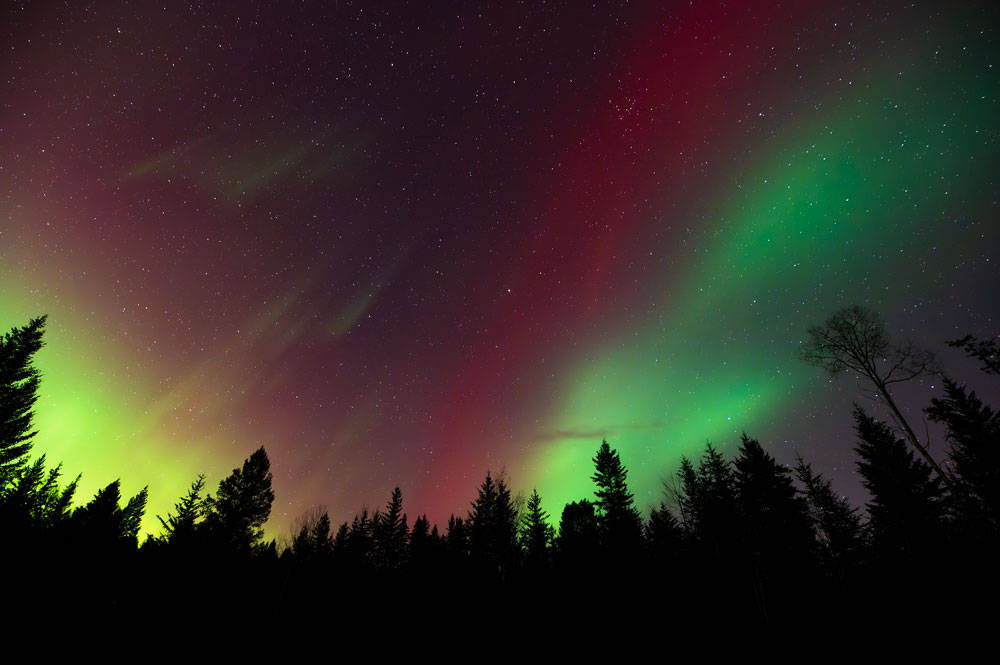
The material in the image has been moving and changing for billions of years. The light has its own journey. For a short time, everything meets at my camera.
Then the shutter closes.
Whatever I captured keeps changing.
So does everything outside the frame.
It brings us to the realization that we and everything we experience is stardust.